20 Historic Homes with Secret Rooms Hidden in Plain Sight
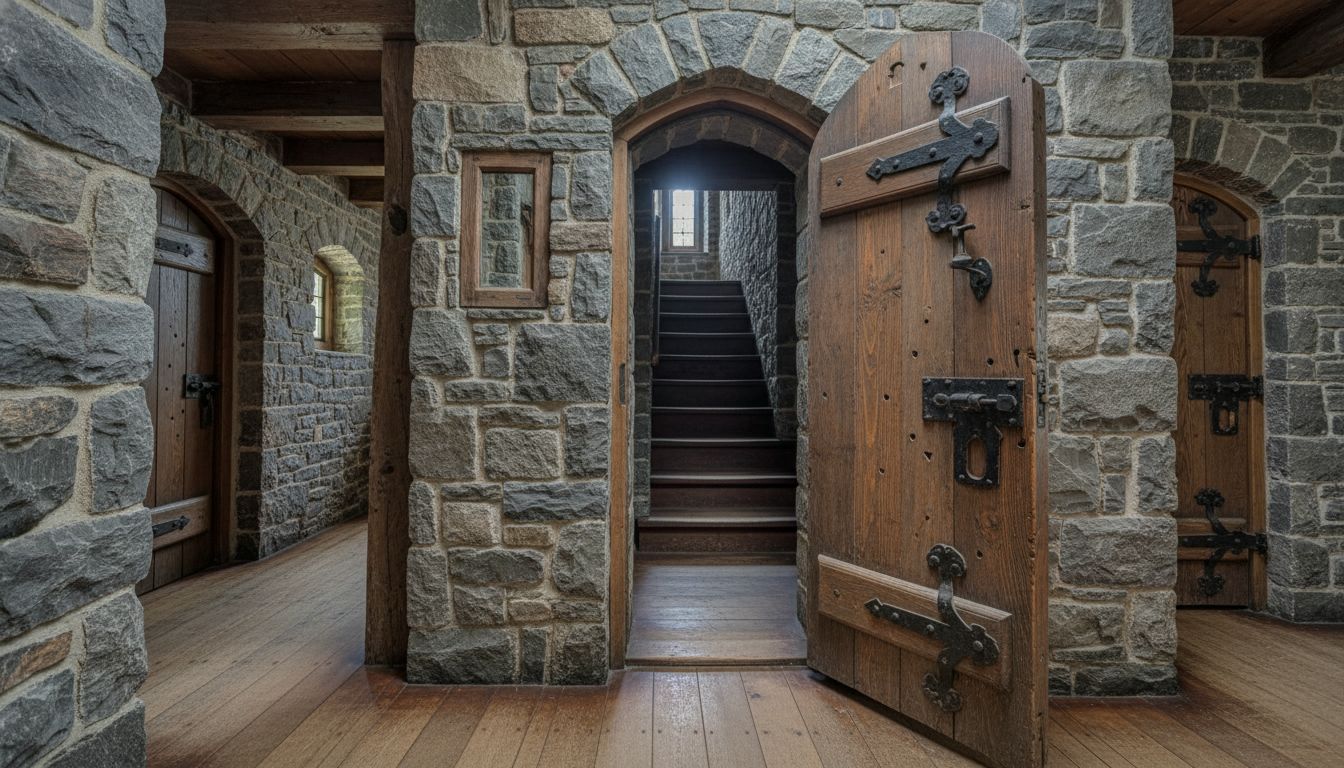
Step inside a historic home and you might think you are seeing every corridor, chamber, and corner. In plenty of famous estates, though, the real story sits behind bookcases, beneath floorboards, and inside fireplaces built to conceal more than heat. One house in Washington, D.C. is said to have 70 hidden doors under one roof, while Bran Castle kept a secret staircase buried for centuries before it was uncovered in 1920. These places are not just architectural curiosities, they are reminders that homes once carried secrets meant to protect, mislead, impress, or simply satisfy a very particular kind of imagination.
House of the Seven Gables’ Secret Stair
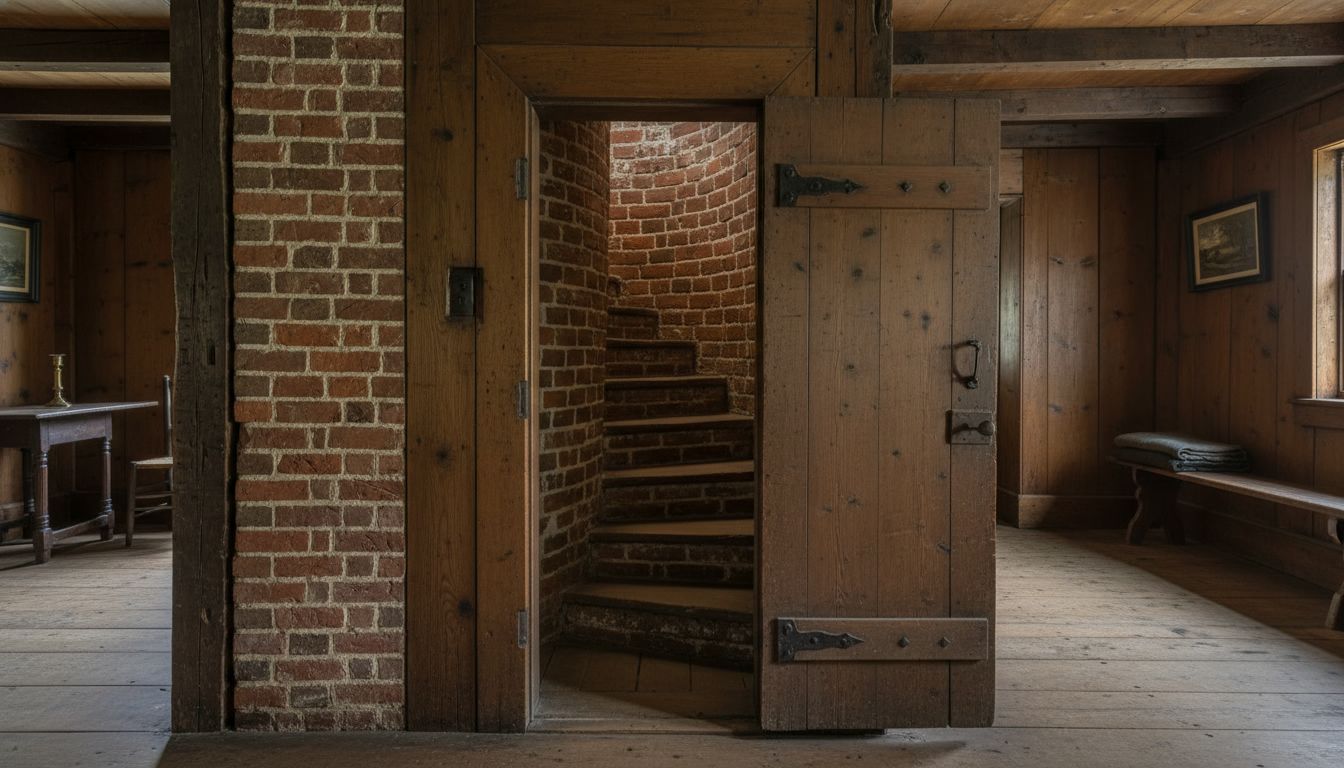
Made famous by Nathaniel Hawthorne's novel, the House of the Seven Gables in Salem, Massachusetts, USA has long lived in the borderland between history and fiction. The 1668 mansion contains a famous secret staircase winding around the central chimney to the attic. What makes it especially intriguing is that the passage was not original, but was added during a 1910 restoration by philanthropist Caroline Emmerton to echo Hawthorne's gothic lore. It is a rare case of life imitating art so neatly that the house became part of the story it inspired. The staircase also fed old rumors of smuggling and witchcraft, which only deepened the house's mystique. Source: Streets of Salem (2023); Harvard Magazine (2016).
Biltmore’s Hidden Service Ways
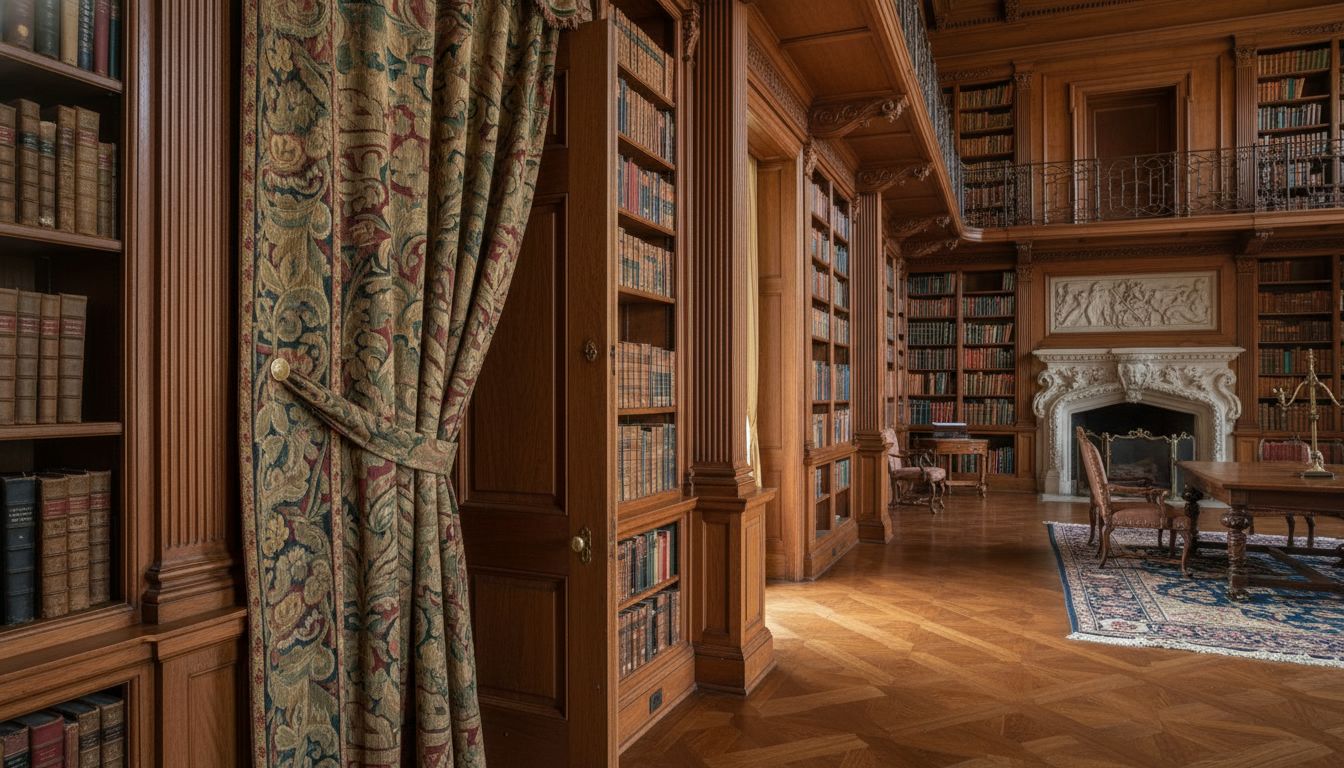
The Biltmore Estate in Asheville, North Carolina, USA is known for grandeur, but its secret doors reveal another layer of design. George Vanderbilt's 250-room Gilded Age mansion includes concealed openings that blend into the opulent decor with impressive precision. In the Breakfast Room, a doorknob hides below a Renoir painting and leads to the butler's pantry. The two-story library contains a passageway behind a heavy tapestry that connects to guest quarters, while a concealed Den sits behind a carving of St. Peter the Martyr. It is a polished example of how the very wealthy used hidden spaces for symmetry, convenience, and discretion. Source: Atlas Obscura (2018); Restonic (2021).
O Street’s Door Labyrinth
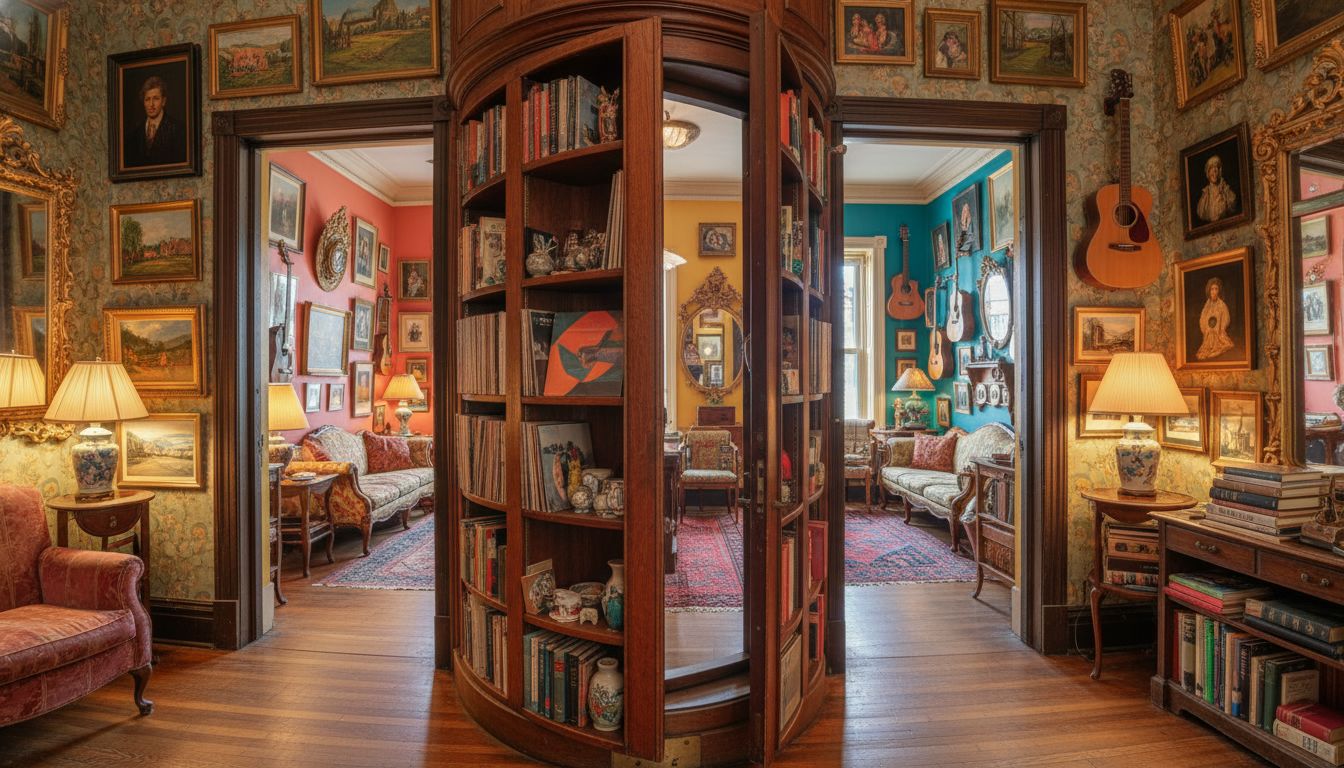
The Mansion on O Street in Washington, D.C., USA opened in 1980, but it behaves like a much older puzzle box. This sprawling complex is actually five interconnected rowhouses with over 100 themed rooms. Hidden doors are everywhere, tucked behind revolving bookcases, wall panels, and mirrors, giving the place the feel of a game played at architectural scale. Visitors can spend hours trying to find them, including a concealed entrance to the basement wine cellar. With over 70 secret doors, it stands out as a modern record-holder for sheer hidden-door density. Source: Atlas Obscura (2026); Wonderful Museums (2025).
Neuschwanstein’s Indoor Grotto
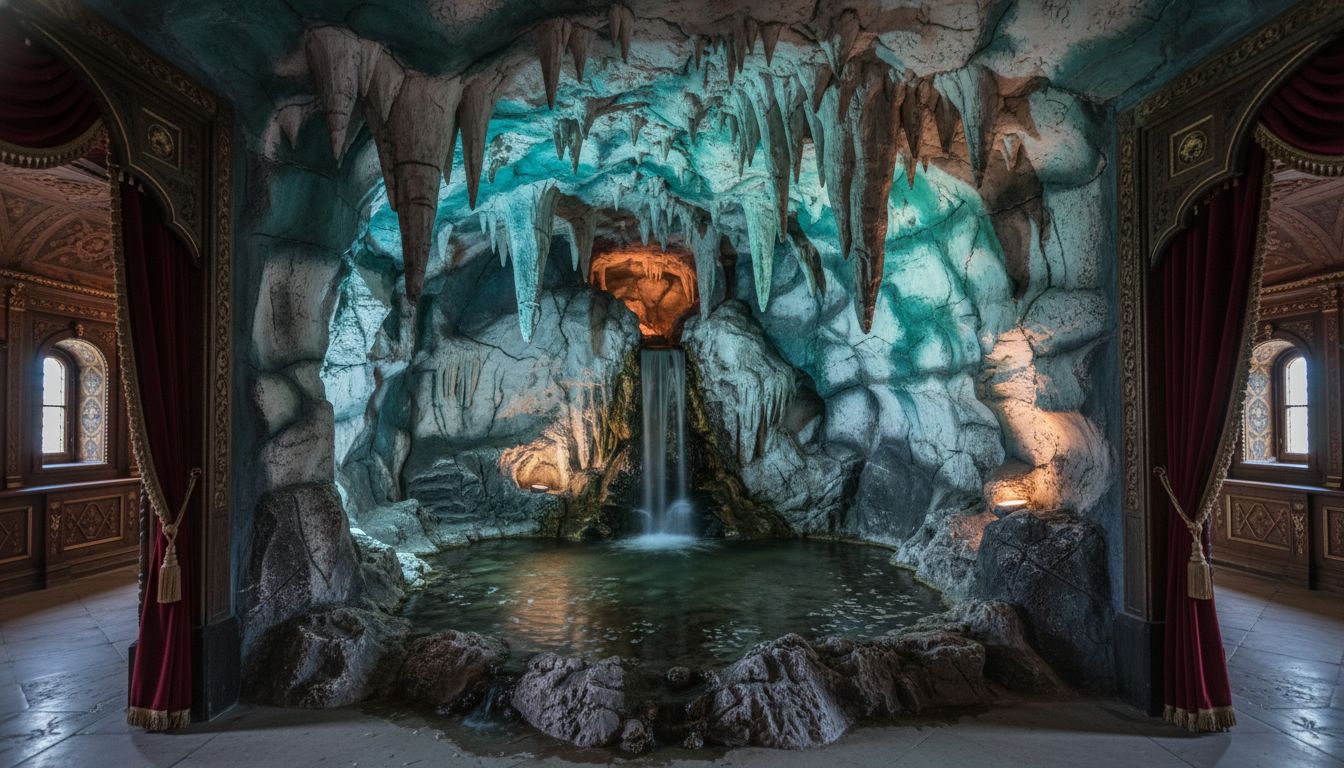
Neuschwanstein Castle in Bavaria, Germany is already theatrical, but its hidden grotto takes the fantasy even further. Built in the 1880s by a set designer, the artificial cave is tucked between the salon and the study inside King Ludwig II’s fairytale castle. Fake stalactites, colored lighting, and a cascading waterfall give it a surreal, staged atmosphere. The room was inspired by the Tannhäuser saga and reflects the king's obsession with Wagnerian opera and spectacle. For a castle with over 200 rooms, this is the one that feels most like stepping onto a private stage. Source: Bavarian Palace Department (2026); Honest History (2026).
Singer Castle’s Watchful Walls
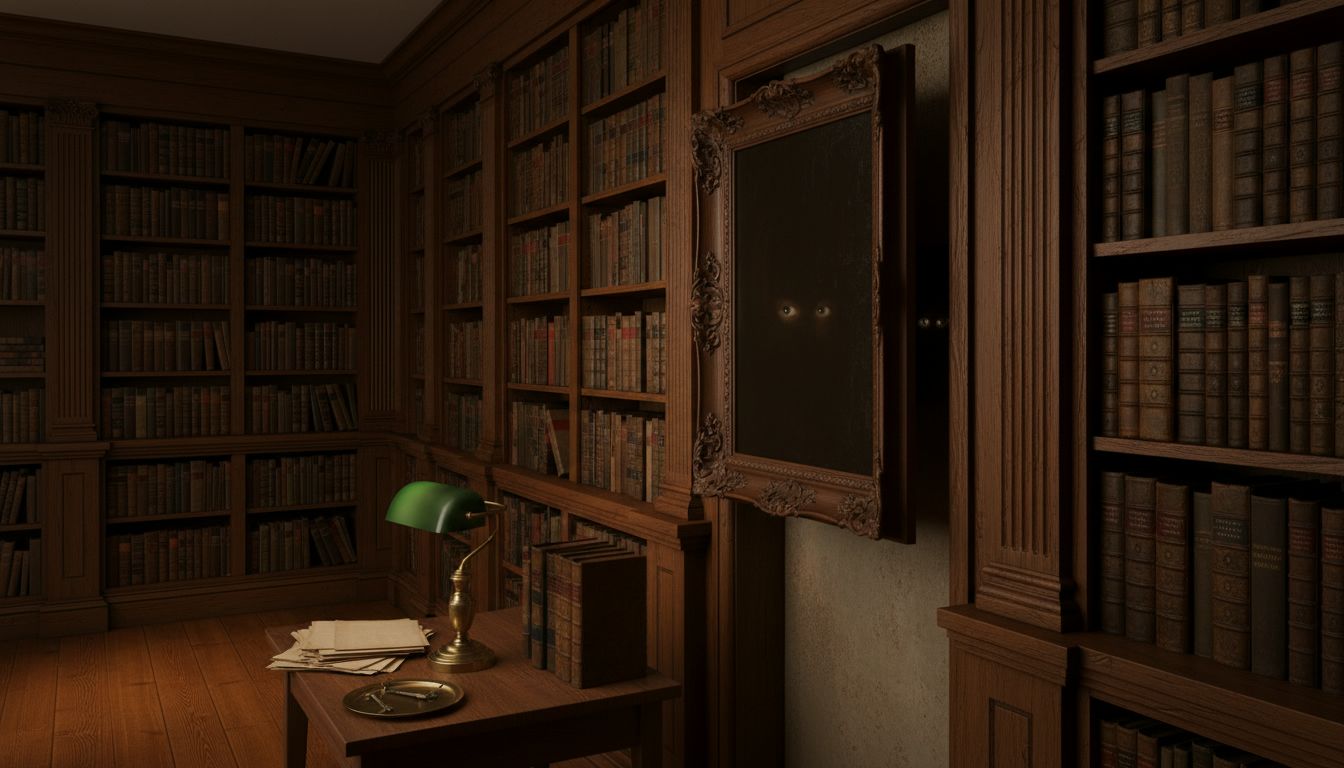
Singer Castle on Dark Island, New York, USA was built in 1905 by Frederick Bourne, president of the Singer Sewing Machine Company, and it carries a strong sense of secrecy. The island hunting lodge is riddled with concealed passages, including a library panel operated by a hidden button in the bookshelves. That panel connects to tunnels inside the walls, while a portrait in the Drawing Room tilts back so the host could spy on guests. Even the grates were designed so servants could eavesdrop. It is hard to think of a more elaborate real-life castle of hidden viewpoints and private movement. Source: Historic Mysteries (2022); Singer Castle Official (2026).
Milton House’s Rescue Tunnel
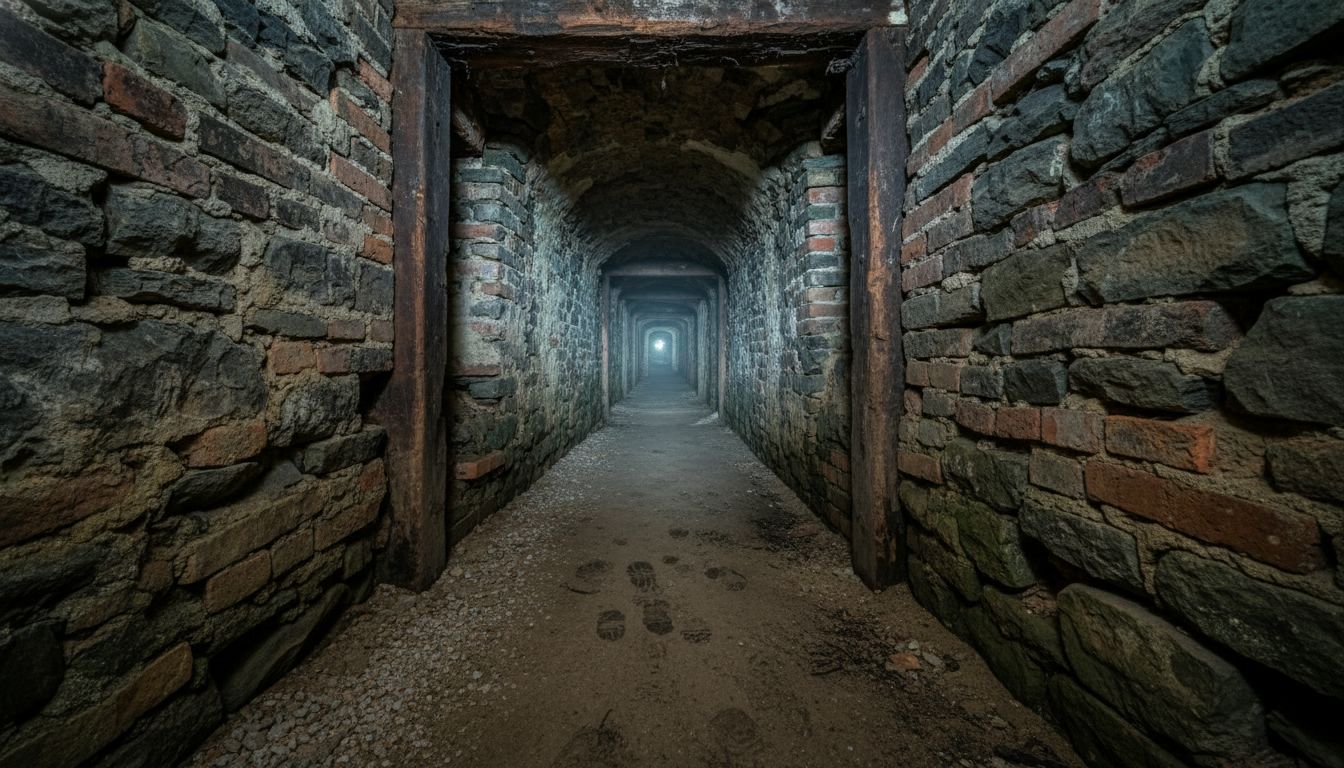
Milton House in Milton, Wisconsin, USA has a quieter kind of secret, but one with far greater stakes. Built in 1844 as a stagecoach inn, this hexagonal concrete building was an authenticated stop on the Underground Railroad. Founder Joseph Goodrich constructed a 45-foot subterranean tunnel linking the inn's cellar to a nearby log cabin. That tunnel let freedom seekers, hidden under wagon supplies, enter in complete secrecy. It is a powerful reminder that hidden architecture was not always about intrigue or style, but about survival. Source: Milton House Museum (2026); Urban Milwaukee (2022).
Monticello’s Hidden Mechanics
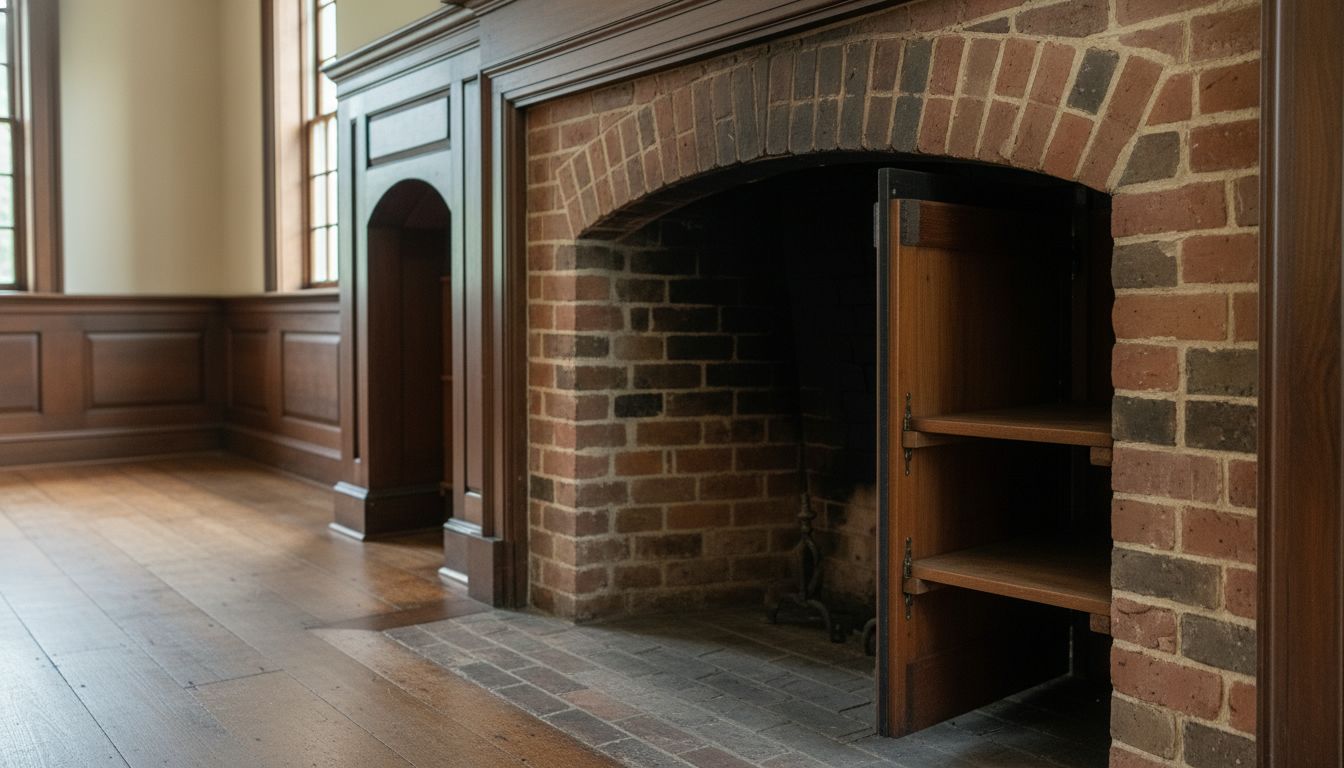
Monticello in Charlottesville, Virginia, USA shows a more controlled, mechanical side of hidden domestic space. Thomas Jefferson designed the estate with clever features that limited visible interaction with enslaved domestic workers. In the dining room, he built a revolving service door with spring-loaded shelves, and he also created a hidden wine dumbwaiter inside the dining room fireplace. Bottles could move up from the cellar without interrupting the formal scene above. The house is striking not just for the ingenuity, but for the way that ingenuity was used to keep people out of sight. Source: Patch (2023); Medium (2021).
Gillette Castle’s Trick Doors
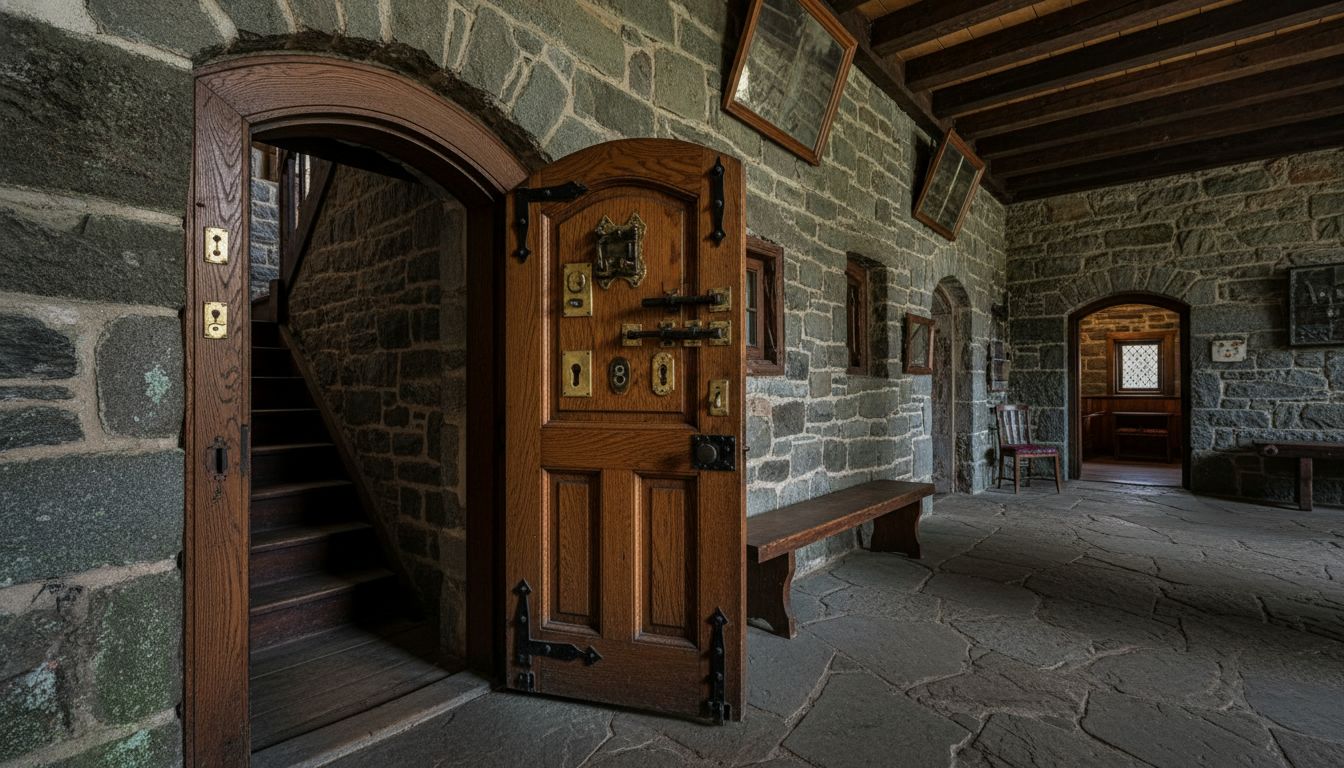
Gillette Castle in East Haddam, Connecticut, USA feels tailor-made for stagecraft, which is fitting for William Gillette, the actor best known for portraying Sherlock Holmes. Completed in 1914, the stone mansion includes 47 unique trick-lock doors. Hidden mirrors over the Great Hall let him spy on guests, while a secret door near the stairs allowed for surprise entrances or quick exits. The house has the playful logic of a detective puzzle, designed by someone who clearly enjoyed staying one step ahead. It is less a formal castle than a private performance in stone. Source: When In Your State (2025); LoveProperty (2025).
Winchester House Gone Wild
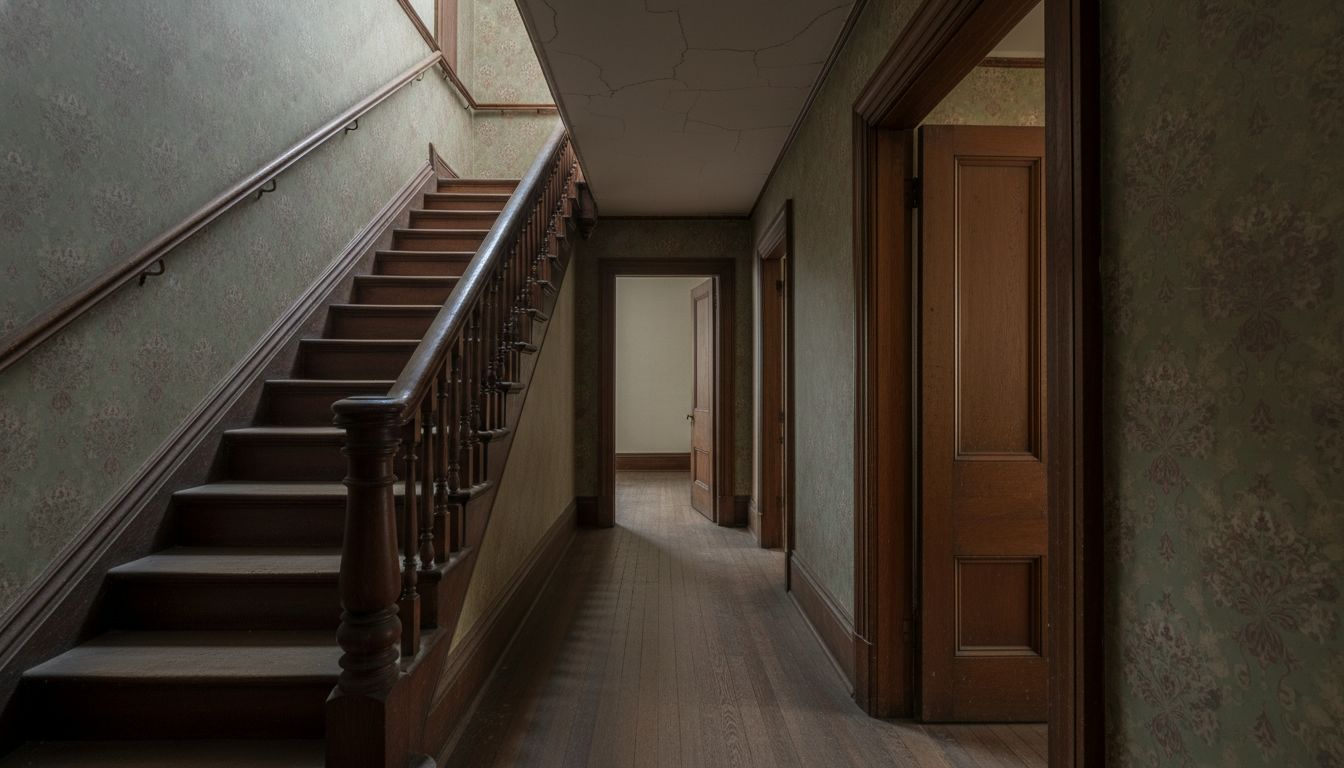
The Winchester Mystery House in San Jose, California, USA is the most famous example of a home built like a maze. Sarah Winchester spent 38 years creating the 160-room, 24,000-square-foot mansion, which now contains over 2,000 doors and 47 stairways. Some doors open into blank walls, and hidden basement sections add to the disorienting layout. The house also includes secret passages and a concealed Witches Cap room. Whether viewed as superstition, obsession, or pure eccentricity, it remains one of America's most recognizable examples of labyrinthine architecture. Source: LoveProperty (2024); Winchester Mystery House Official Site (2025/2026).
Passetto di Borgo Escape Route
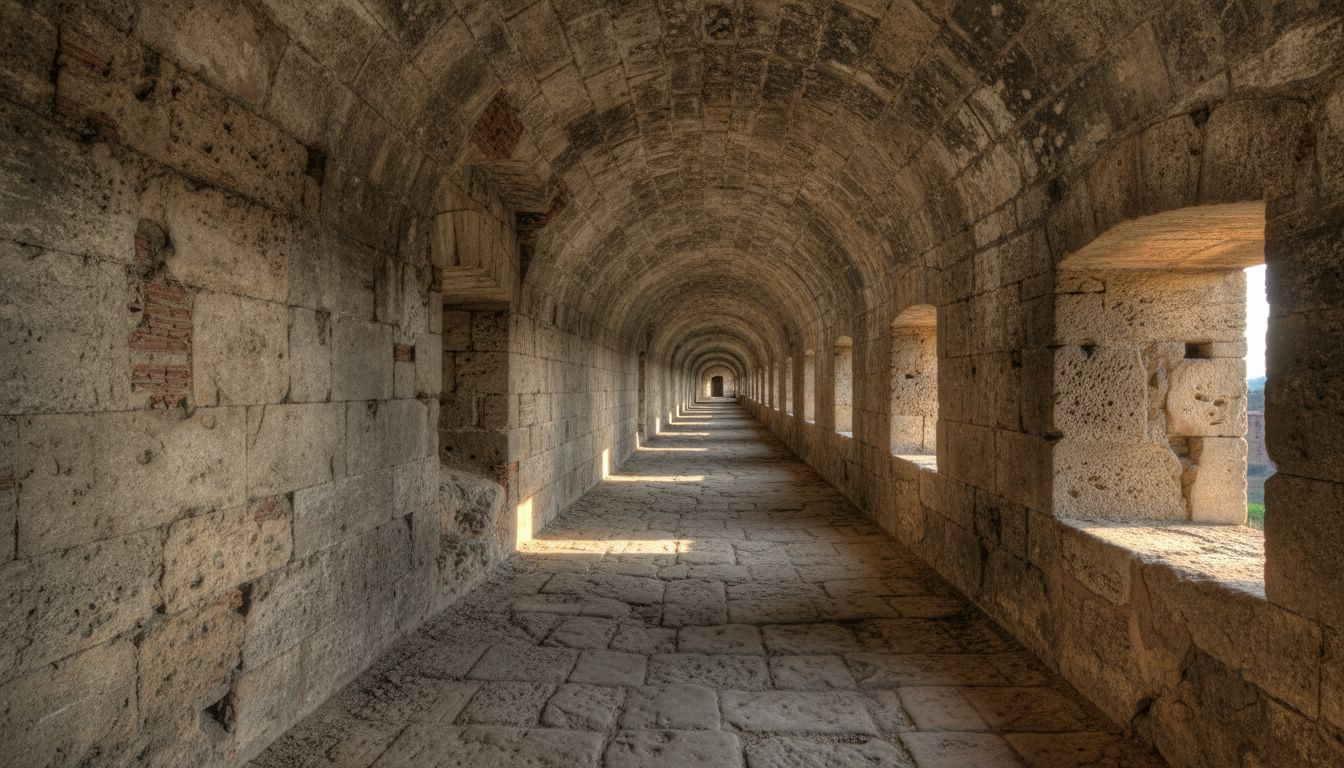
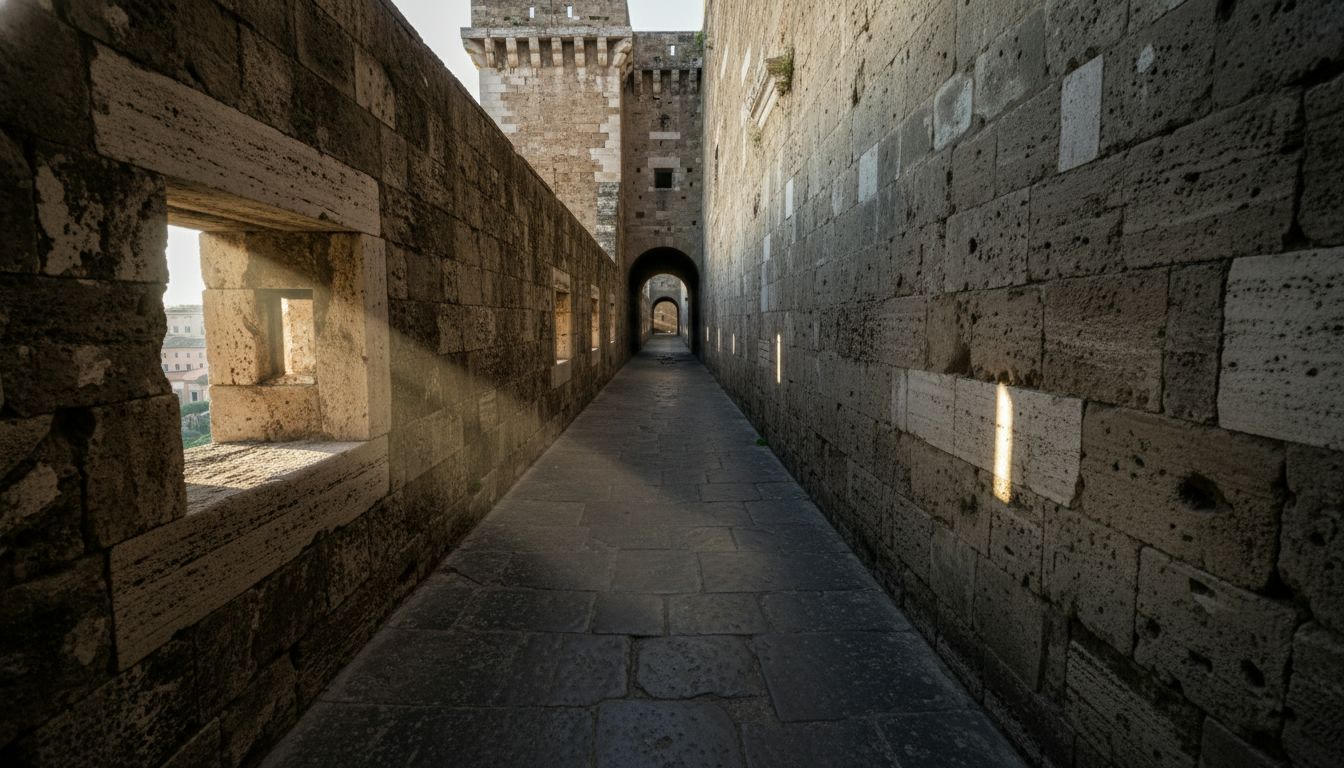
The Passetto di Borgo in Rome, Italy is less a secret room than a secret lifeline. Commissioned in 1277, this 800-meter elevated corridor connects Vatican City to the heavily fortified Castel Sant'Angelo. It was used by Pope Alexander VI in 1494 to escape an invasion, and Pope Clement VII famously fled through it during the Sack of Rome in 1527. With the Swiss Guard massacred, the passage carried real political consequence, not just architectural intrigue. Few hidden routes have served survival so directly or on such a monumental scale. Source: ArcheoRoma (2026); Wikipedia (2026).
Francesco I’s Secret Studiolo
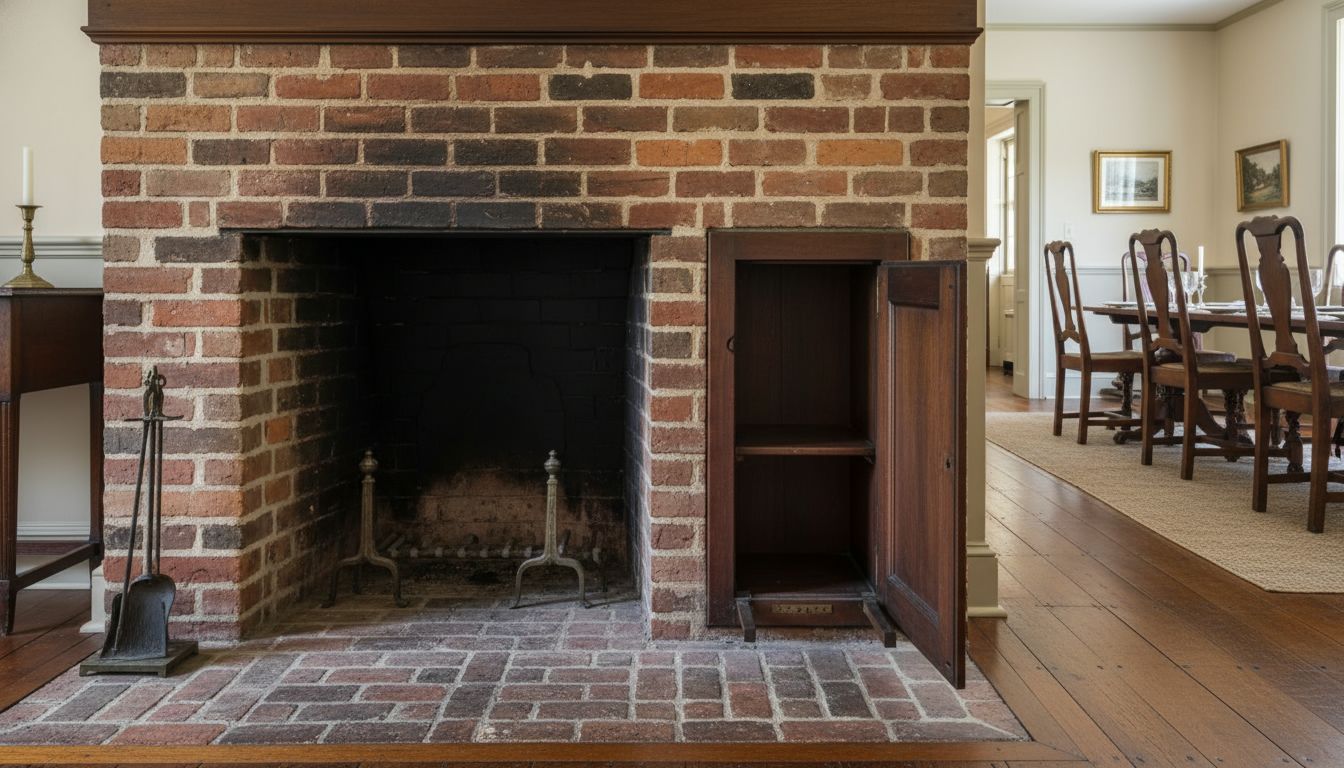
The Studiolo of Francesco I at Palazzo Vecchio in Florence, Italy is a compact masterpiece of secrecy and display. Built in the 1570s, the tiny, windowless room served as a secret alchemy laboratory for the Grand Duke of Tuscany. Its walls are covered in two tiers of oil paintings that double as hidden cabinet doors for rare gems and potions. A secret door also allowed Francesco to enter unseen from the Hall of Five Hundred. The result is a Renaissance cabinet of wonders that feels equal parts art gallery, laboratory, and private hiding place. Source: Web Gallery of Art (2026); Foresyte (2026).
Himeji’s Concealed Samurai
Himeji Castle in Himeji, Japan, known as the White Heron Castle, is a lesson in defensive architecture. Its 83 buildings create a maze-like system meant to slow and trap attackers. Hidden rooms, or musha-kakushi, sit inside the keep where samurai bodyguards could conceal themselves. From those secret spaces, defenders could launch surprise ambushes, while wooden wall spikes added another layer of defense. The castle shows how hidden rooms could serve a clear military purpose, especially in feudal Japan. Source: Remitly (2025); One-JP (2015).
Bran Castle’s Lost Staircase
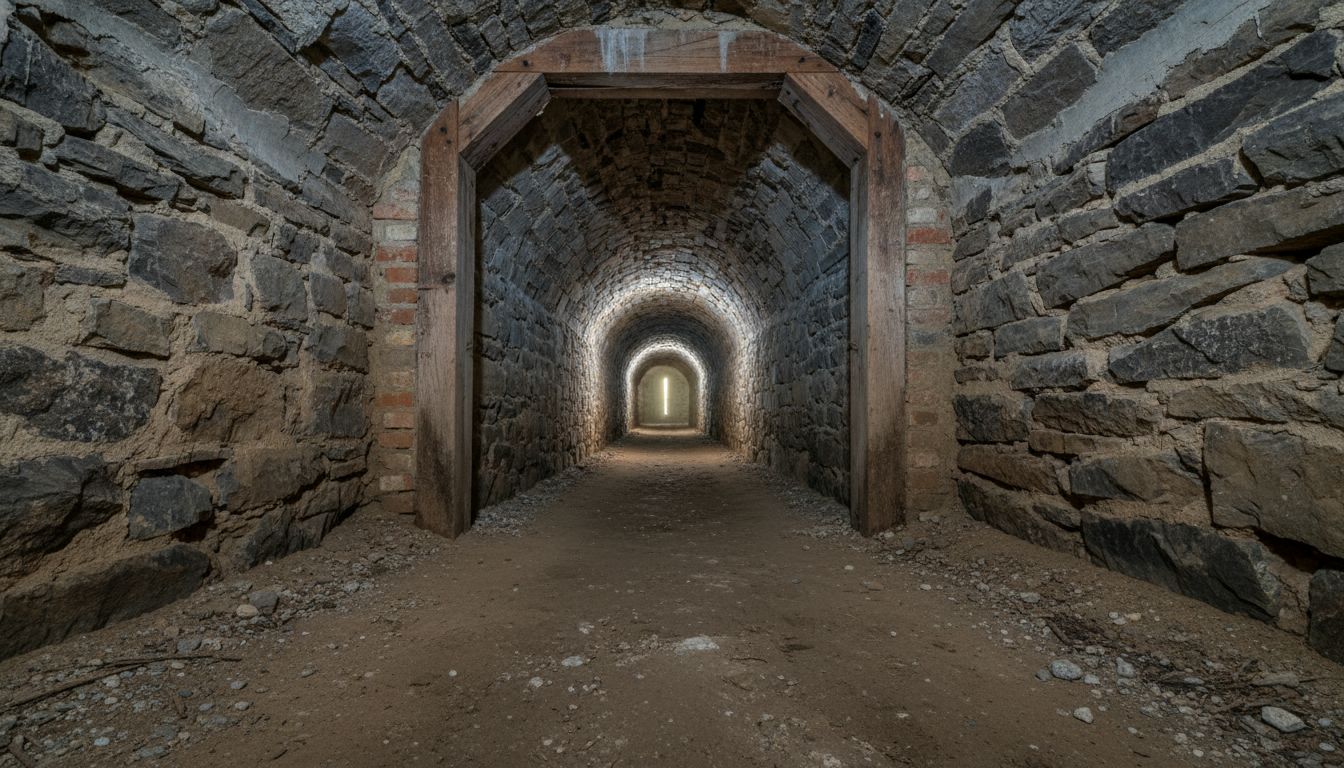
Bran Castle in Transylvania, Romania carries the kind of legend that makes any hidden passage feel larger than life. This 14th-century fortress concealed a real secret staircase connecting the first and third floors. The dark, narrow stone route stayed unknown for centuries until it was accidentally discovered in 1920. Workers moving an old decorative fireplace during Queen Marie's renovations uncovered the shaft, which had historically served as an emergency escape route for officers. It is one of those discoveries that sounds like fiction but belongs firmly to history. Source: CastlesWorld (2026); Tours of Romania (2018).
Predjama’s Cliffside Tunnel
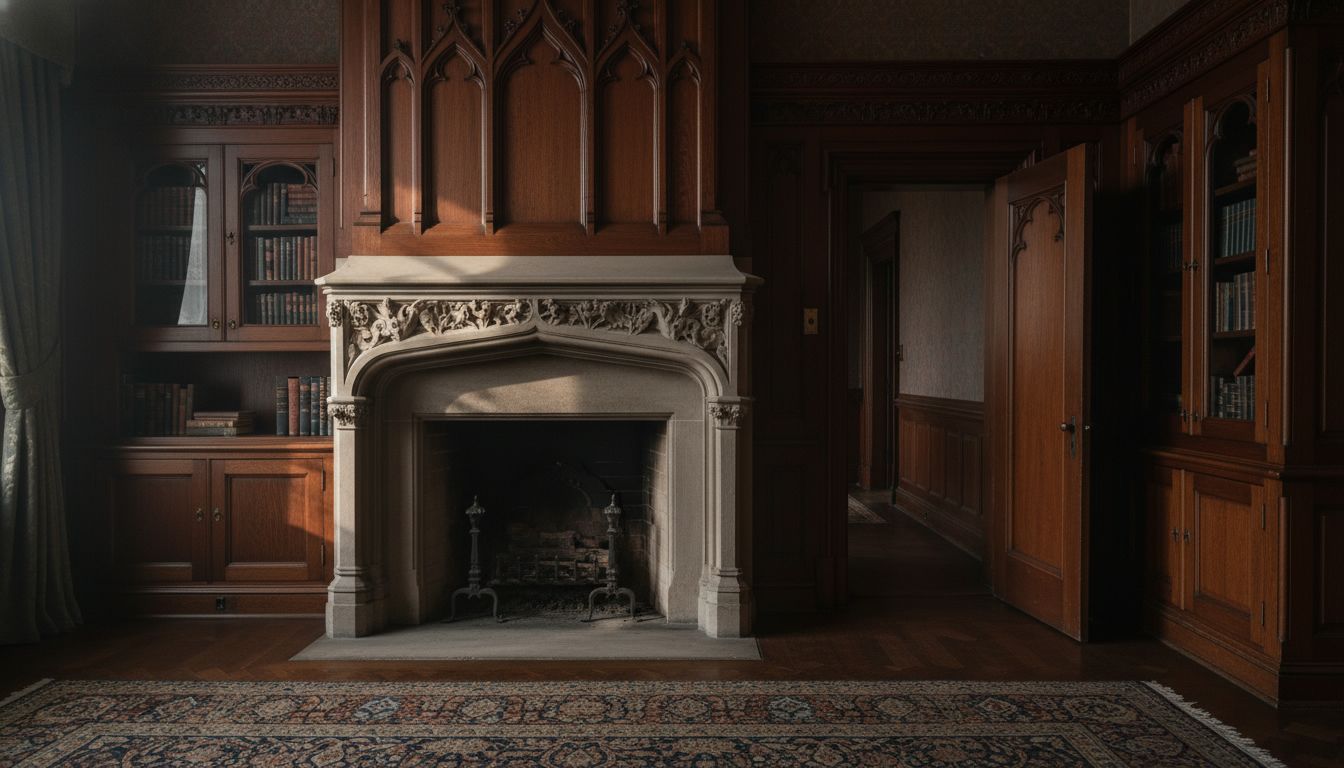
Predjama Castle in Postojna, Slovenia is extraordinary even before the hidden tunnel comes into view. Built directly into a 123-meter-high cliff face, the 13th-century fortress contains a 6-kilometer secret cave tunnel. In the 15th century, rebellious knight Erazem Lueger used it to survive a year-long siege, fetching fresh food and cherries from a nearby village. He even mocked his attackers by throwing the fruit over the walls. The story ends violently, but the castle’s location and tunnel make it one of the most dramatic examples of defensive ingenuity. Source: Messy Nessy Chic (2015); Futura (2026).
Mermaid Inn’s Smugglers’ Paths
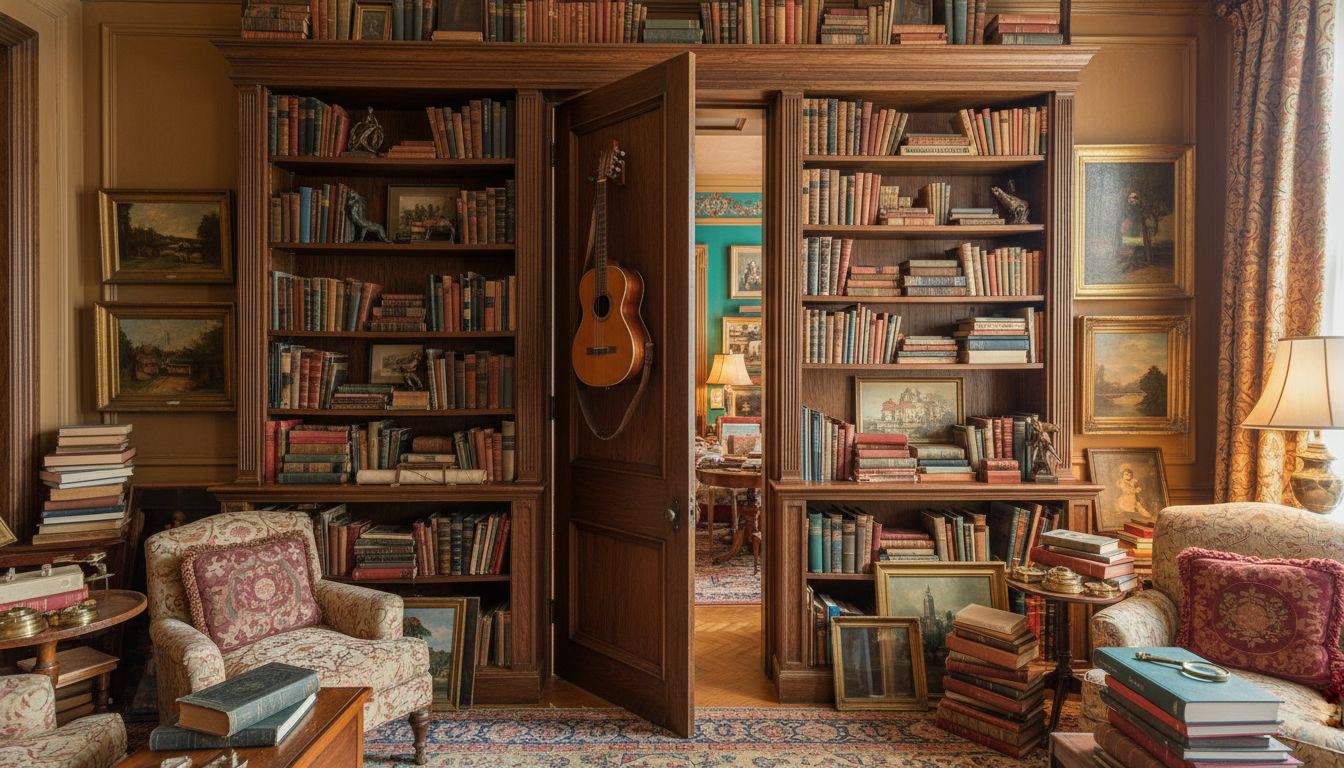
The Mermaid Inn in Rye, East Sussex, England was rebuilt in 1420, but its later life made it famous for all the wrong reasons. In the 18th century, it became a stronghold of the notorious Hawkhurst smuggling gang. A revolving bookcase led to a secret staircase, while a tunnel connected the cellars to the nearby Old Bell Inn. Those passages gave smugglers fast routes for moving and escaping before the authorities could catch up. It is a classic example of a historic inn that hid a second, far more secret life. Source: Rye News (2024); Mermaid Inn Official (2026).
Levi Coffin House Crawlspace
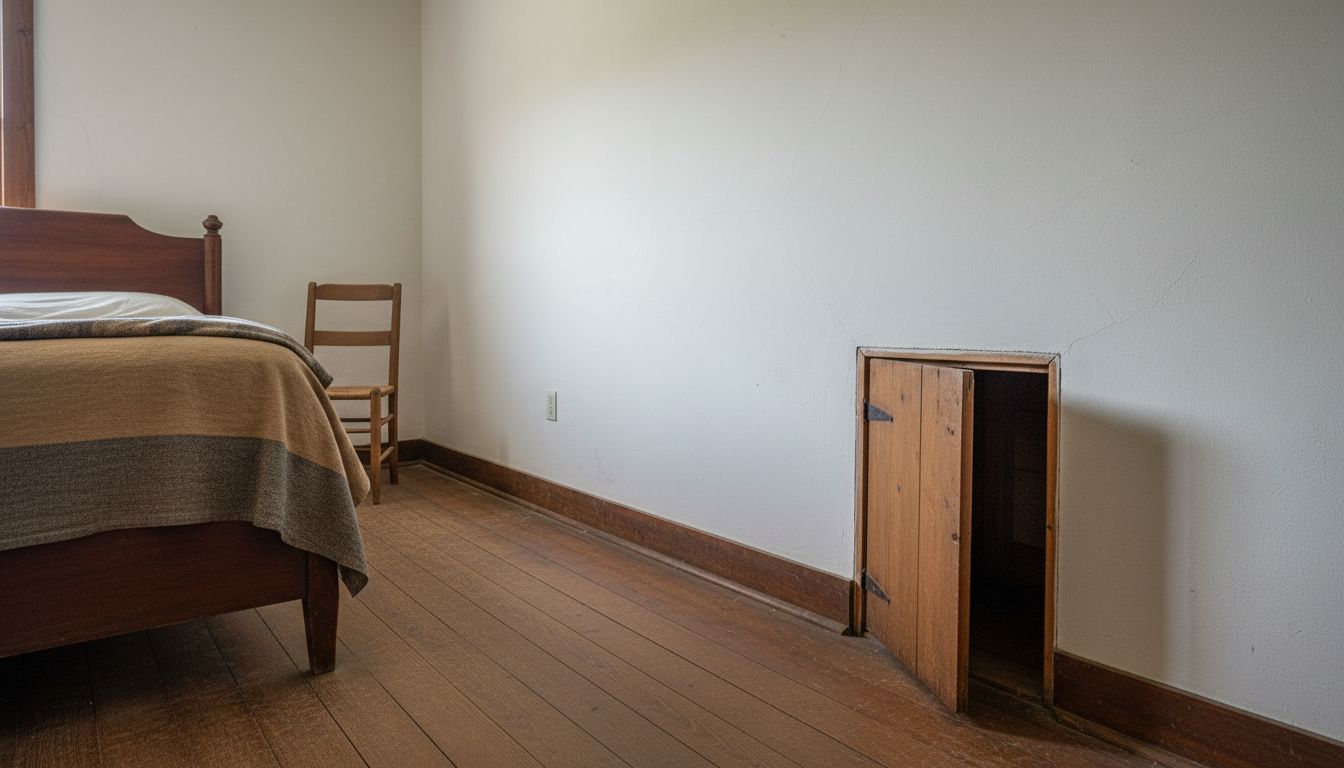
The Levi Coffin House in Fountain City, Indiana, USA earned its reputation the hard way. Known as the Grand Central Station of the Underground Railroad, this 1839 Quaker home safely harbored over 2,000 freedom seekers. In an upstairs bedroom, a small hidden door, once concealed behind a heavy bed, opens into a tight crawlspace between the walls. As many as 14 people could hide there during a search, even if the space was unbearably hot. It is one of the clearest examples of a hidden room built for protection, not performance. Source: Visit Indiana (2015); Indiana Landmarks (2016).
Baddesley Clinton’s Watery Hide
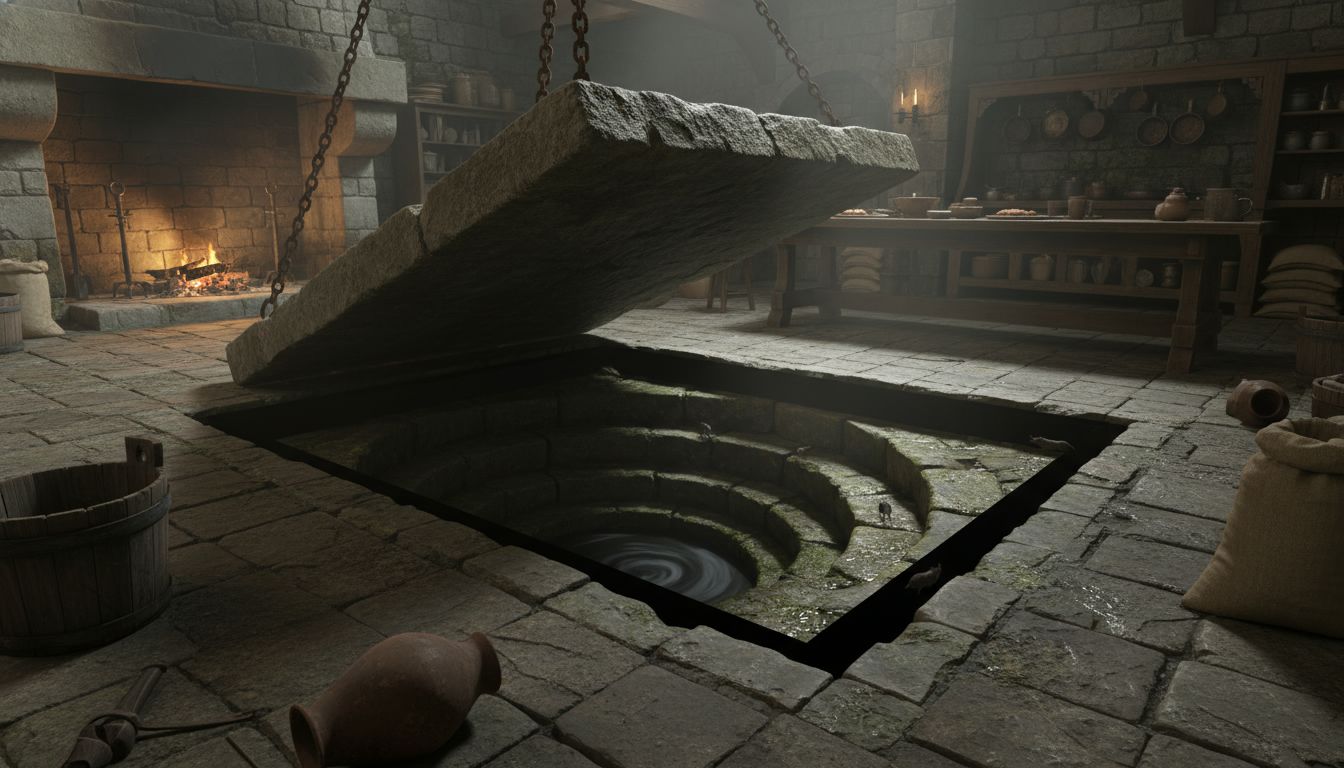
Baddesley Clinton in Warwickshire, England holds one of the most harrowing secret-room stories on the list. In the 1580s, Catholic sympathizers hired master builder Nicholas Owen to install three priest holes in the moated manor. During a terrifying 1591 raid by priest-hunters, several men hid for four hours ankle-deep in water inside a secret shaft connected to the medieval sewers. They narrowly escaped execution. That combination of danger, ingenuity, and survival makes the house one of history's most dramatic concealed spaces. Source: The Tudor Travel Guide (2018); National Trust (2026).
Harvington Hall’s Perfect Hides
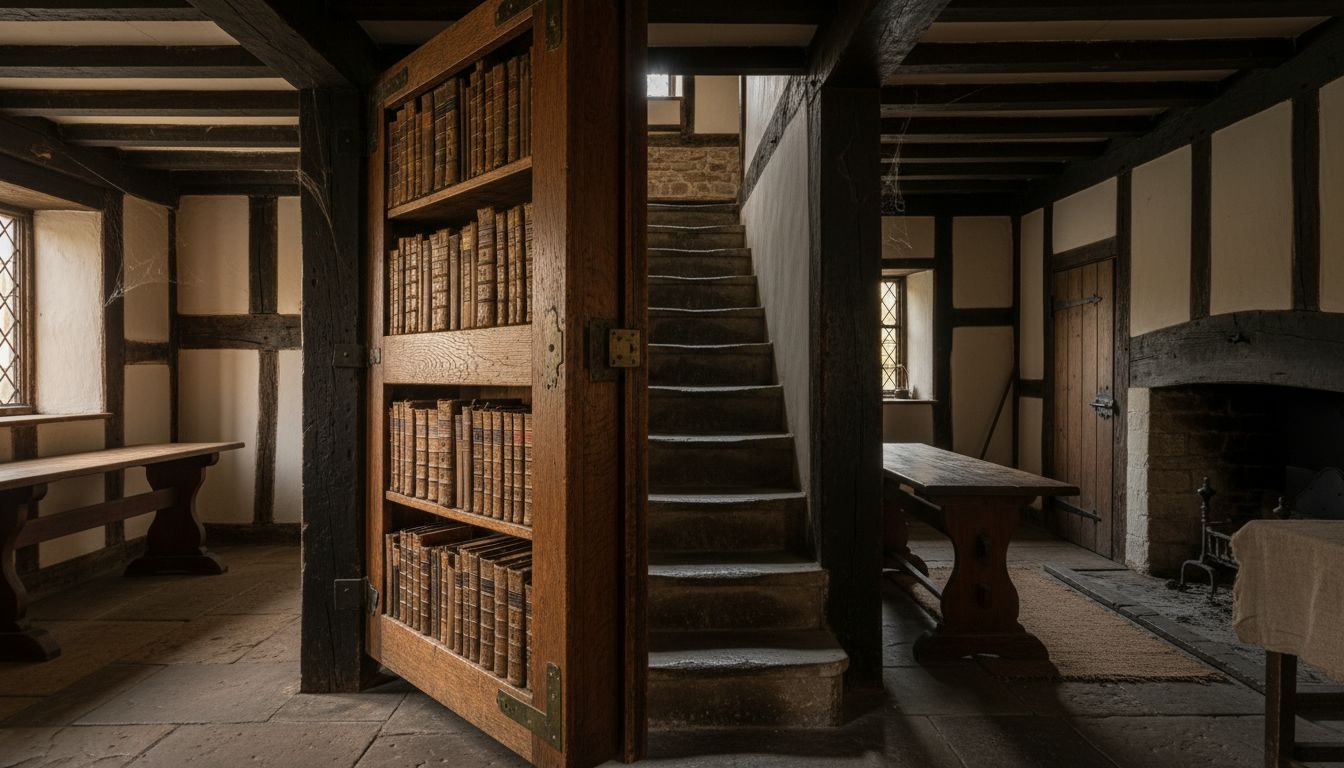
Harvington Hall in Worcestershire, England contains seven of the finest surviving priest holes in the country. Built in the 1580s, these ingenious hiding places were designed by master carpenter Saint Nicholas Owen. One was not discovered until 1894, and another is concealed behind a swinging wooden beam in the library. That hide leads to an 8-foot-long room with an entrance barely a foot wide. It is a remarkable example of architectural camouflage shaped by danger and quiet resolve. Source: Torch of the Faith (2018); Harvington Hall Official (2026).
Casa Loma’s Underground World
Casa Loma in Toronto, Canada pairs castle fantasy with practical hidden routes. Completed in 1914, the 98-room Gothic Revival mansion features an 800-foot underground tunnel connecting the castle to the stables. In Sir Henry Pellatt's mahogany-paneled study, secret doors on either side of the fireplace lead to the second floor and the massive basement wine cellar. The tunnel later served as a secret research facility during World War II, adding another chapter to its unusual history. It is a grand private residence that never seemed content to stop at the surface. Source: Eric Gets Lost (2023); Itinerary and Beyond (2025).
Glamis Castle’s Hidden Legend
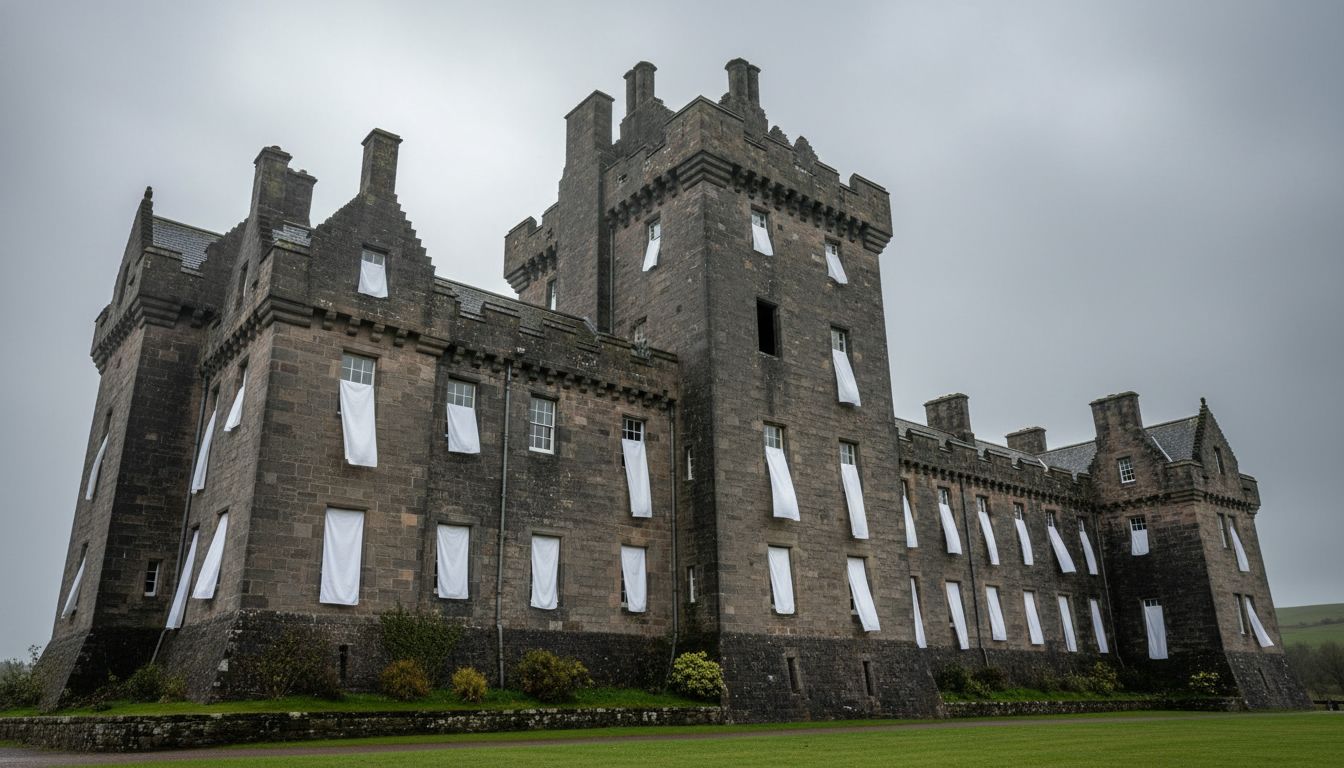
The Secret Chamber of Glamis Castle in Angus, Scotland is as much a mystery as a room. This 15th-century castle became the center of a dark 19th-century legend about a hidden chamber where a deformed heir, the Monster of Glamis, was said to be locked away. The family never confirmed the story, which only made the rumors more persistent. Victorian guests reportedly hung towels from every window to try to spot the secret room from outside. It is the kind of aristocratic mystery that keeps a castle alive in public imagination long after the facts fade. Source: Smithsonian Magazine (2012); Ancient Origins (2026).