The Treehouse that Rose to 10 Stories
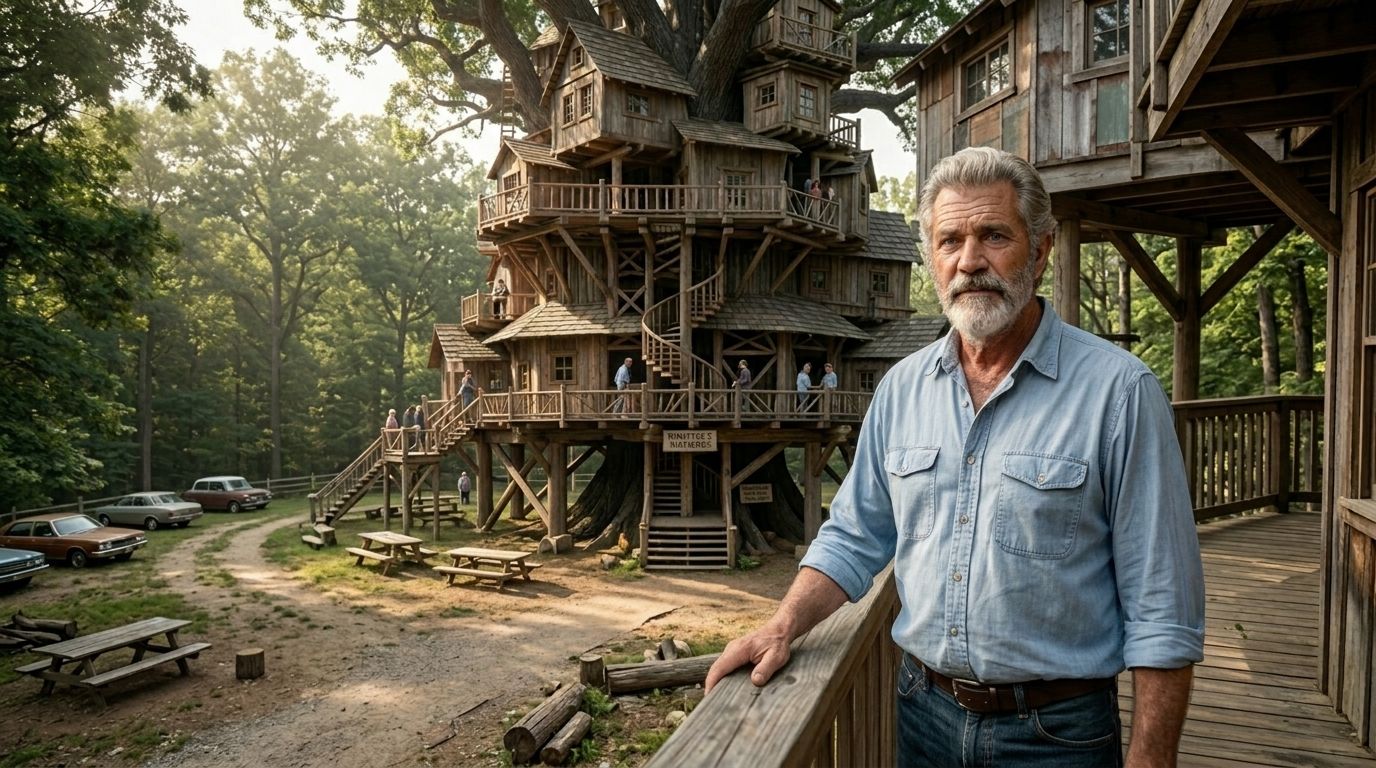
In the woods outside Crossville, Tennessee, Horace Burgess spent years building something that looked more like a dream than a house. What began as a vision in 1993 grew into a 10-story wooden landmark with dozens of rooms, a sanctuary, and a tower that reached nearly 100 feet. It drew curiosity, admiration, and eventually official scrutiny. Then, in 2019, it vanished in a fire that left almost nothing behind.
A Life Full of Turns
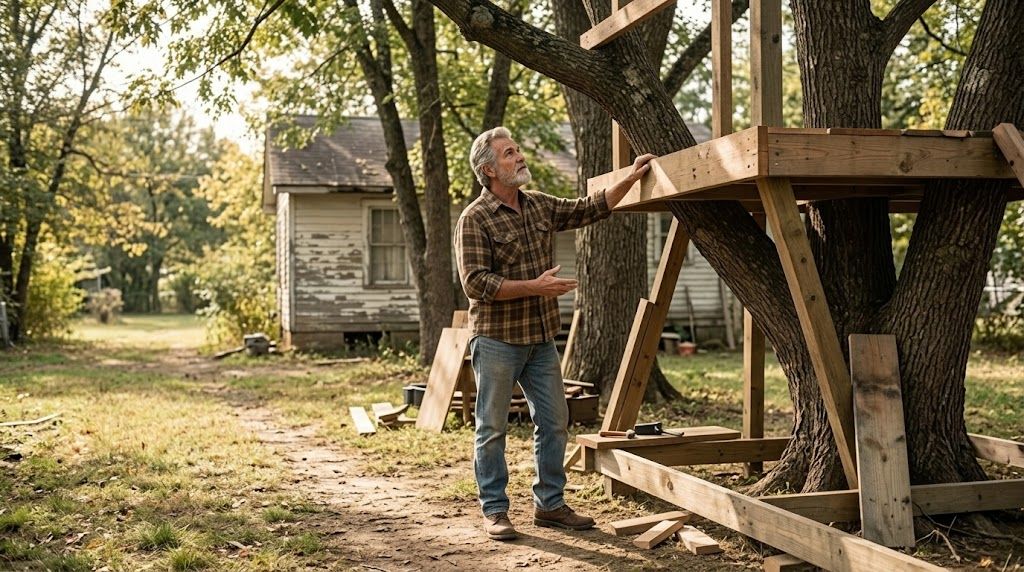
Before the treehouse made his name known far beyond Tennessee, Horace Burgess had already lived several very different lives. According to Detroiturbex, he served as a soldier in the Vietnam War, worked on skyscrapers in Houston, and even spent time as a male dancer. He later settled into work as a landscaper and minister, a shift that made his story feel even more unexpected. That varied background mattered, because the man who eventually built the Minister's Treehouse was never ordinary to begin with.
The First Treehouse Burns
The famous treehouse was not Burgess's first experiment with wood and height. In the 1980s, he built a smaller treehouse that later became his personal retreat during a difficult period in his life. Wanting to change course, he said he heard a divine voice telling him to burn it down. He did, later calling it the most sane moment of his life. That earlier act now reads like a quiet prelude to the much larger structure that would follow.
A Vision in 1993
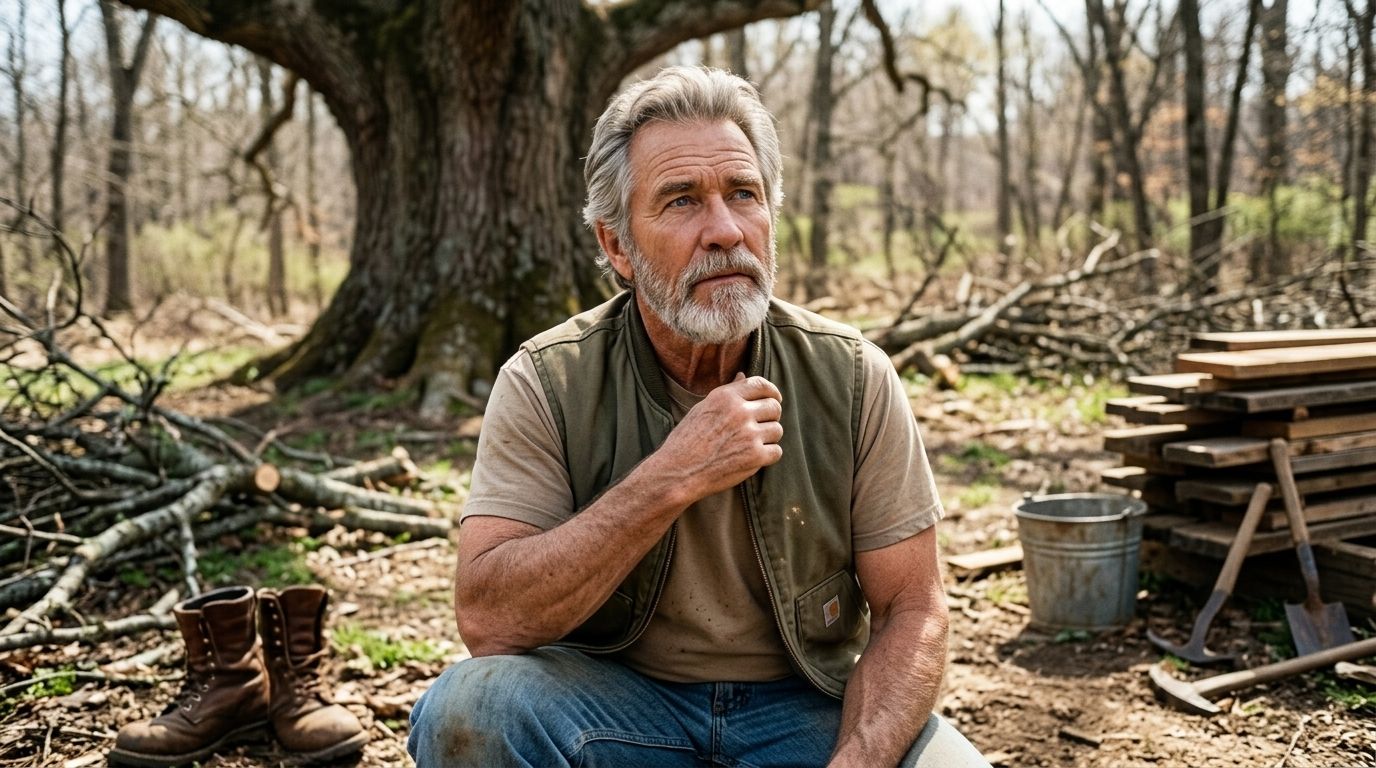
The main project began in 1993, when Burgess said he was praying and received a clear instruction. According to his account, God told him, "If you build me a treehouse, I'll see that you never run out of material." He accepted the message and started building, without knowing how far it would go. What followed was not a quick weekend project, but a long, steady obsession that stretched across years. For Burgess, the treehouse became less of a hobby and more of a calling.
One Tree at the Core
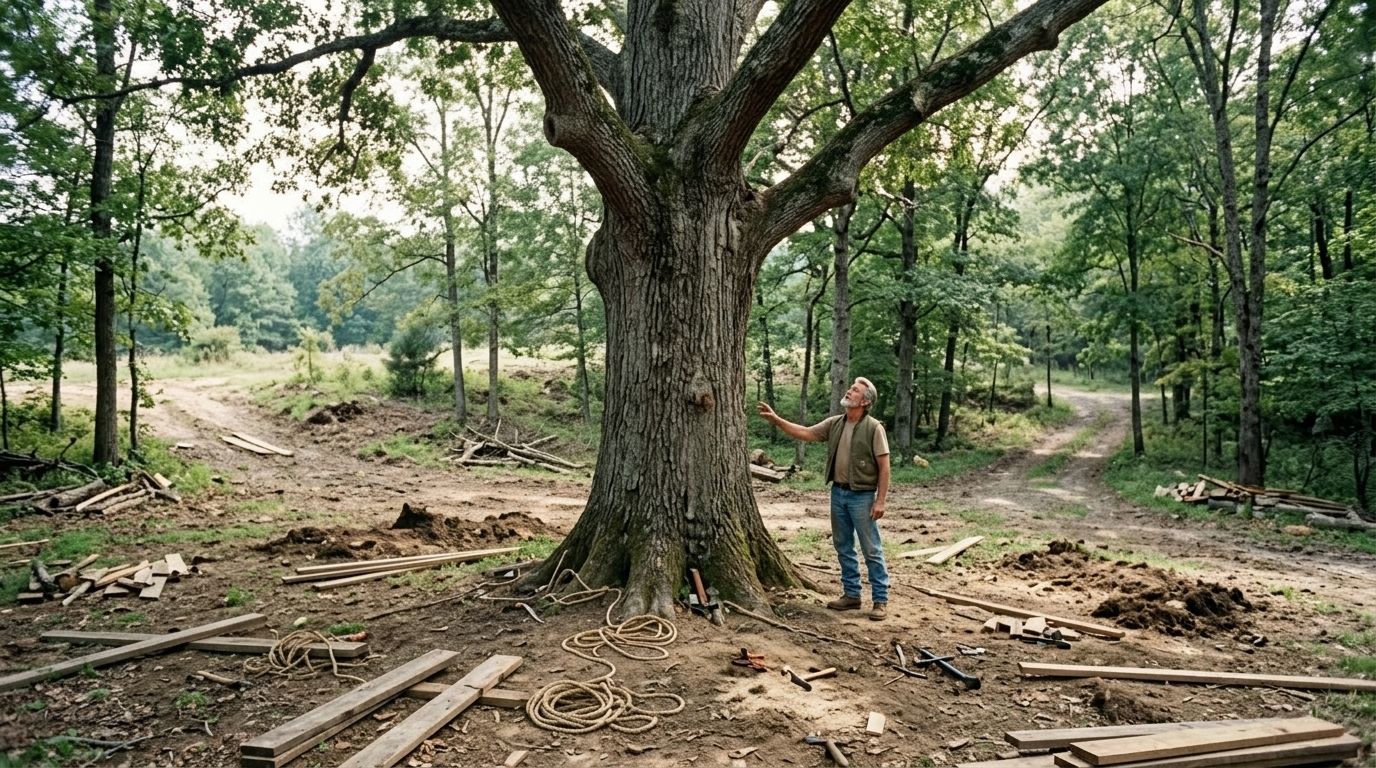
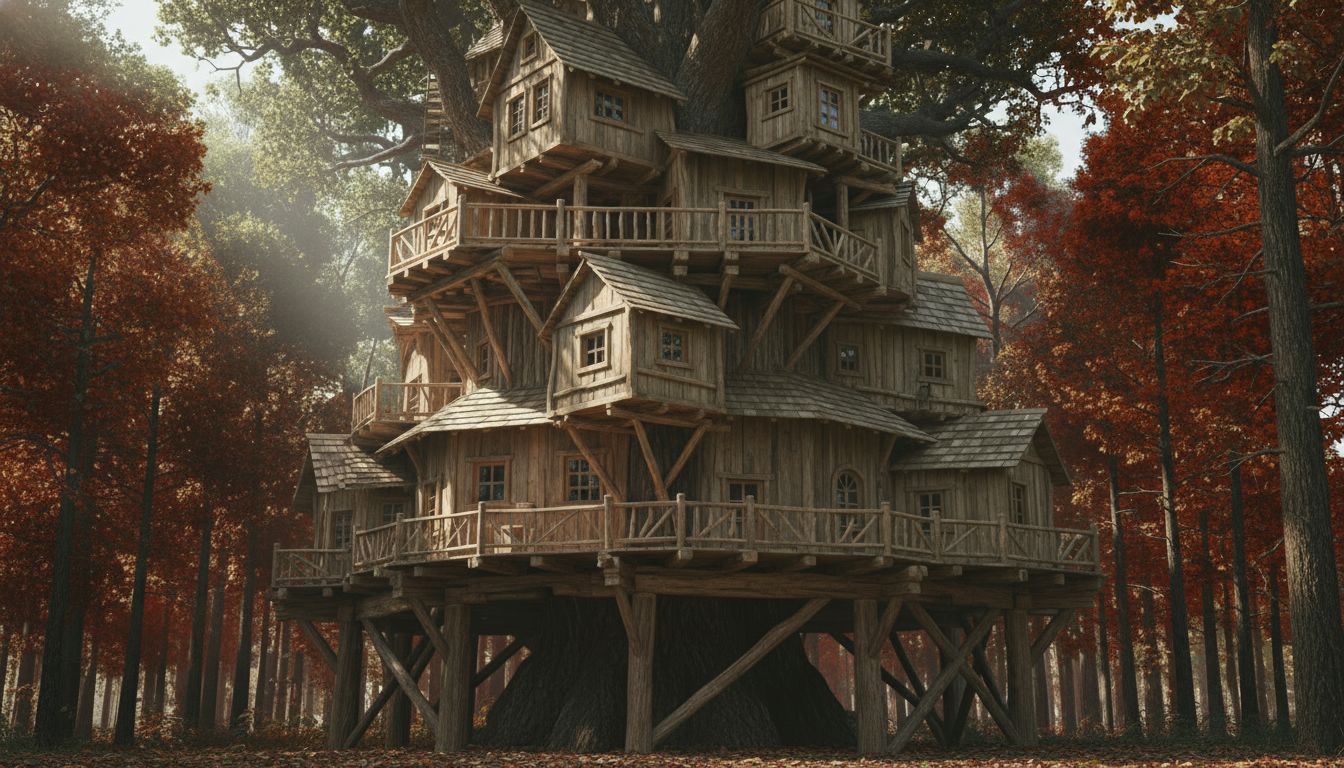
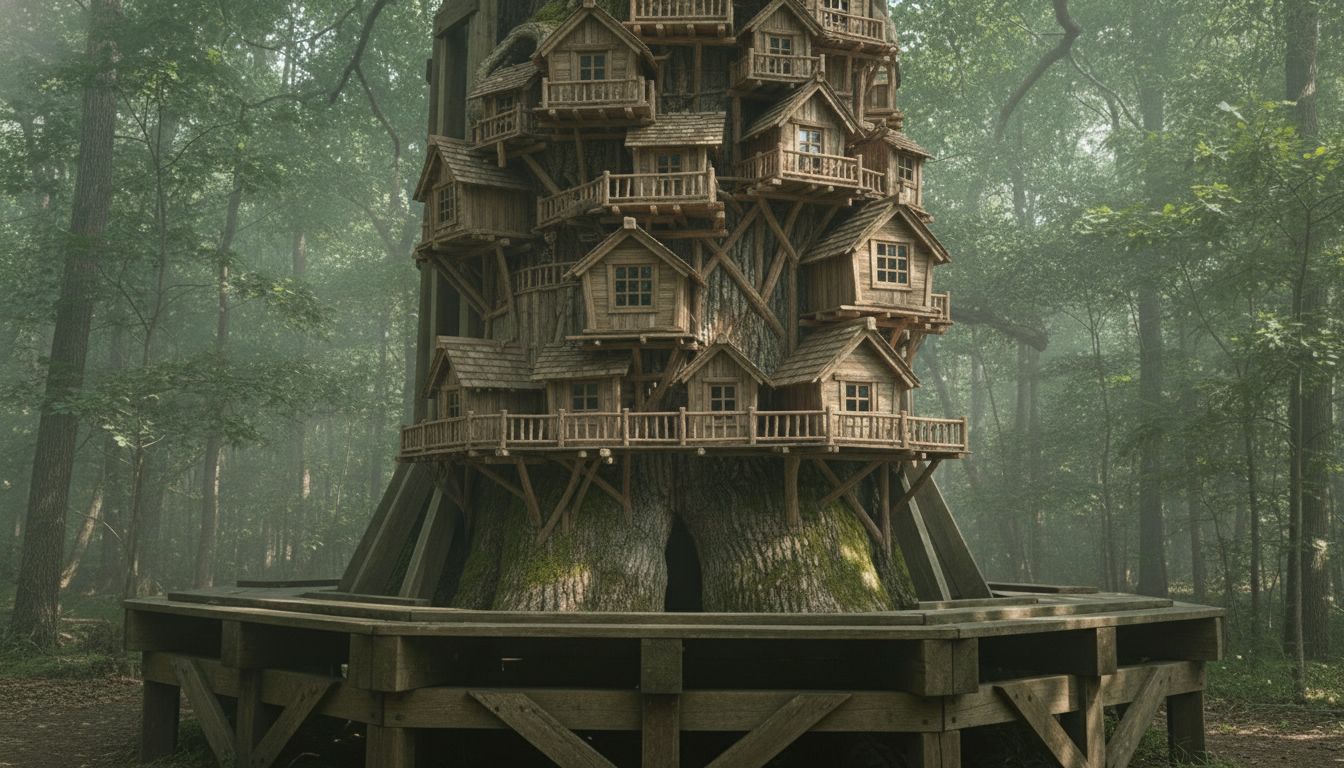
At the center of the structure stood a massive living white oak. Reports described it as about 80 feet tall, with a base nearly 12 feet across, and it served as the main anchor for the house. That single tree gave the project both its name and its backbone. Instead of building around a frame on the ground, Burgess built upward into the tree itself. It was the kind of foundation most builders would never even consider.
A Forest of Support
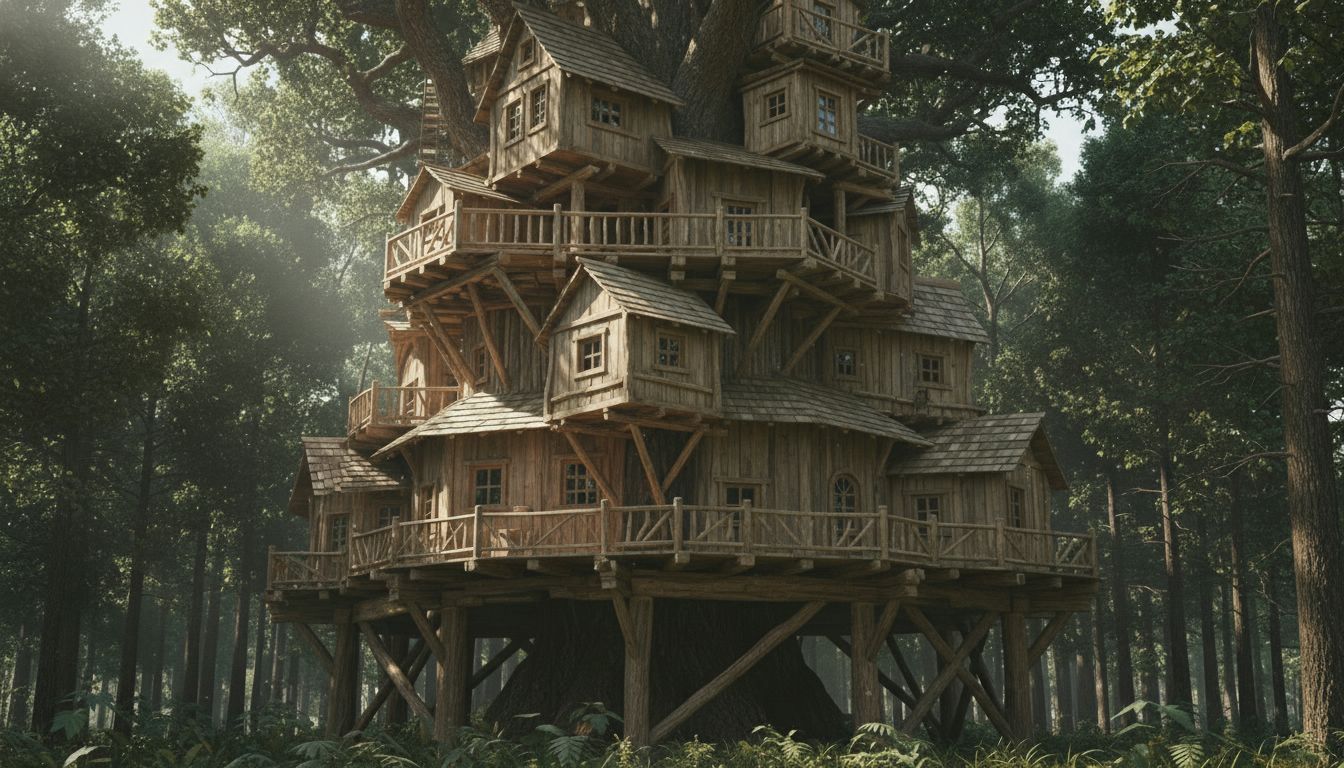
As the treehouse expanded, one tree was no longer enough to carry the load. Burgess brought six other surrounding oak trees into the structure, turning the build into a living cluster rather than a single anchored tower. In total, seven trees helped support the house. That detail gives the project its strange power, since it was never separate from the woods around it. The treehouse did not sit in the forest so much as grow out of it.
No Plans, Just Faith
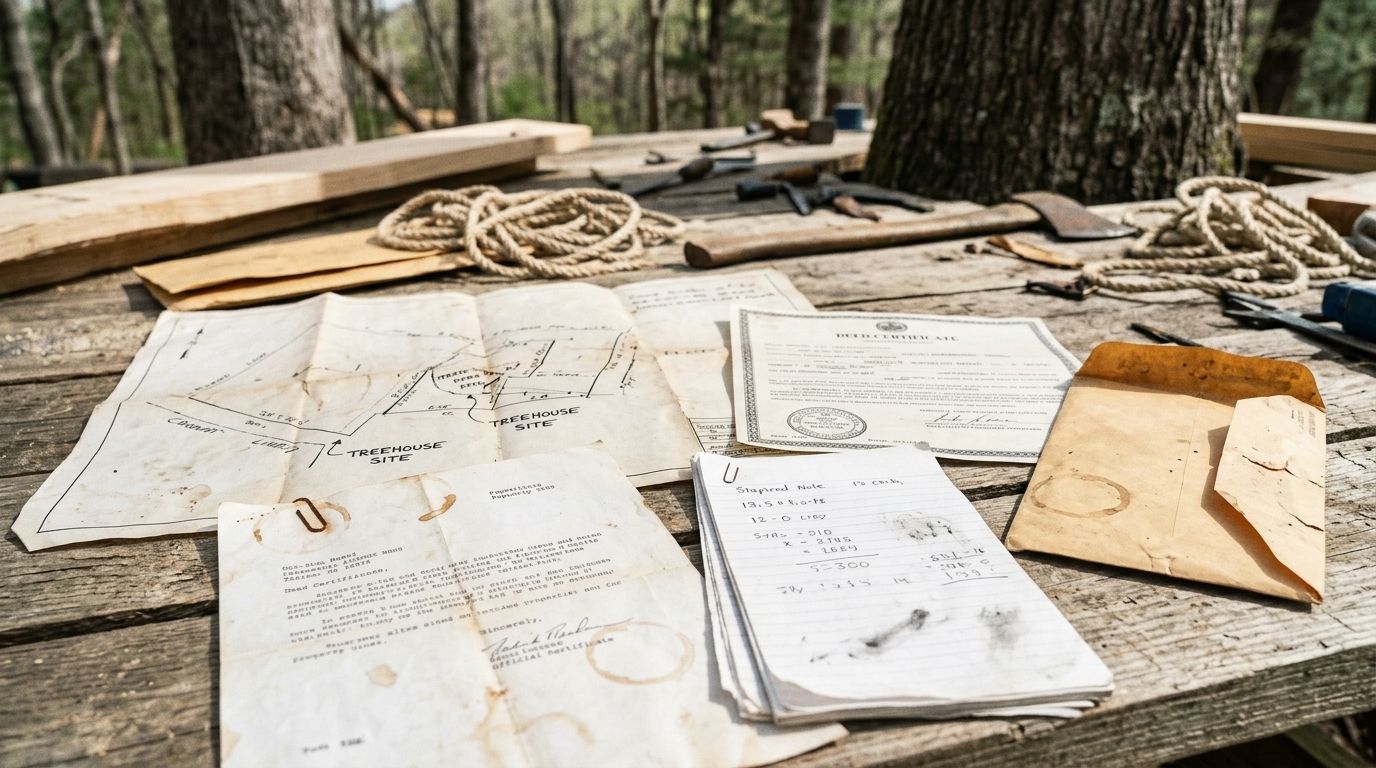
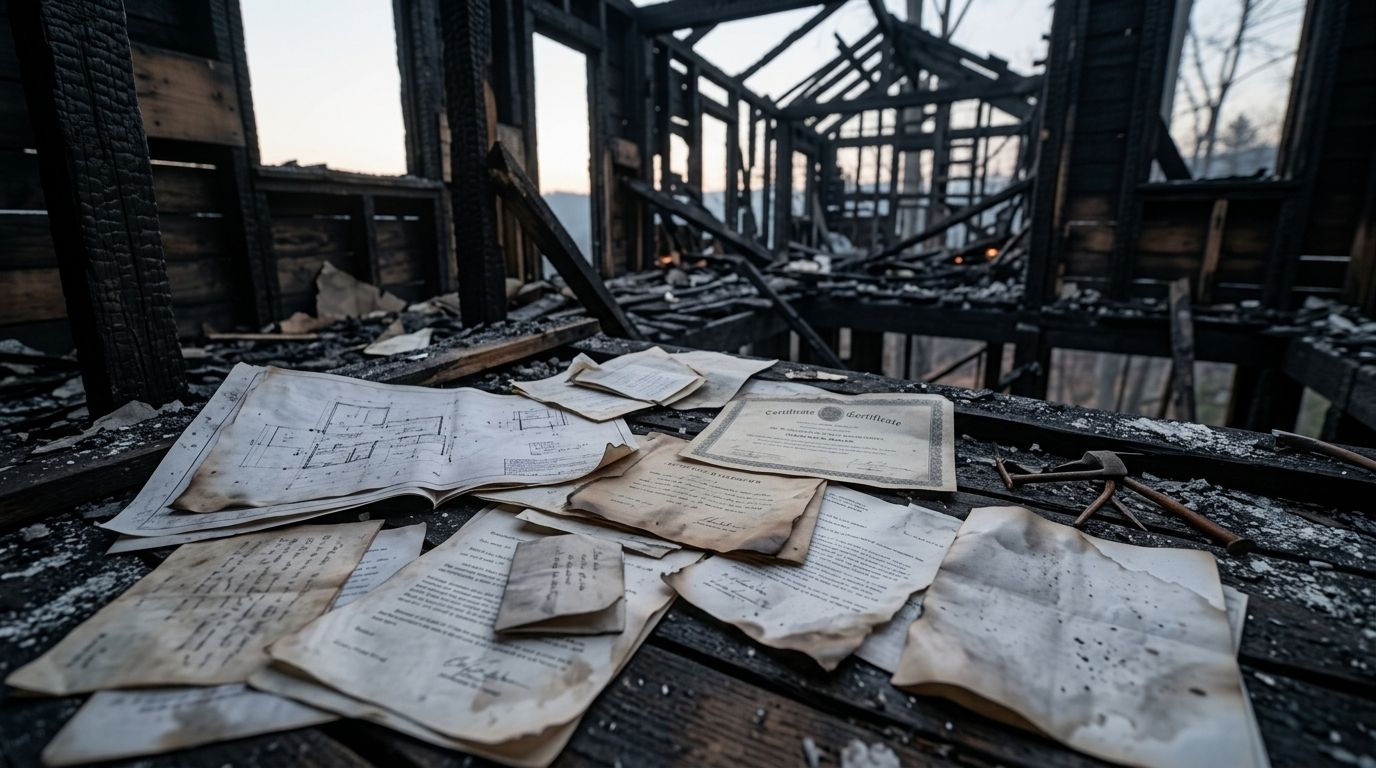
Despite the scale of the project, Burgess never drew blueprints. He said God was his architect, and he built as he went, adding rooms, stairs, and platforms based on daily inspiration and whatever materials were available. That approach gave the treehouse its unusual shape and made it feel like a living work rather than a fixed design. Every section was an answer to the last one. The result was chaotic, but it was also deeply personal.
Wood from Everywhere
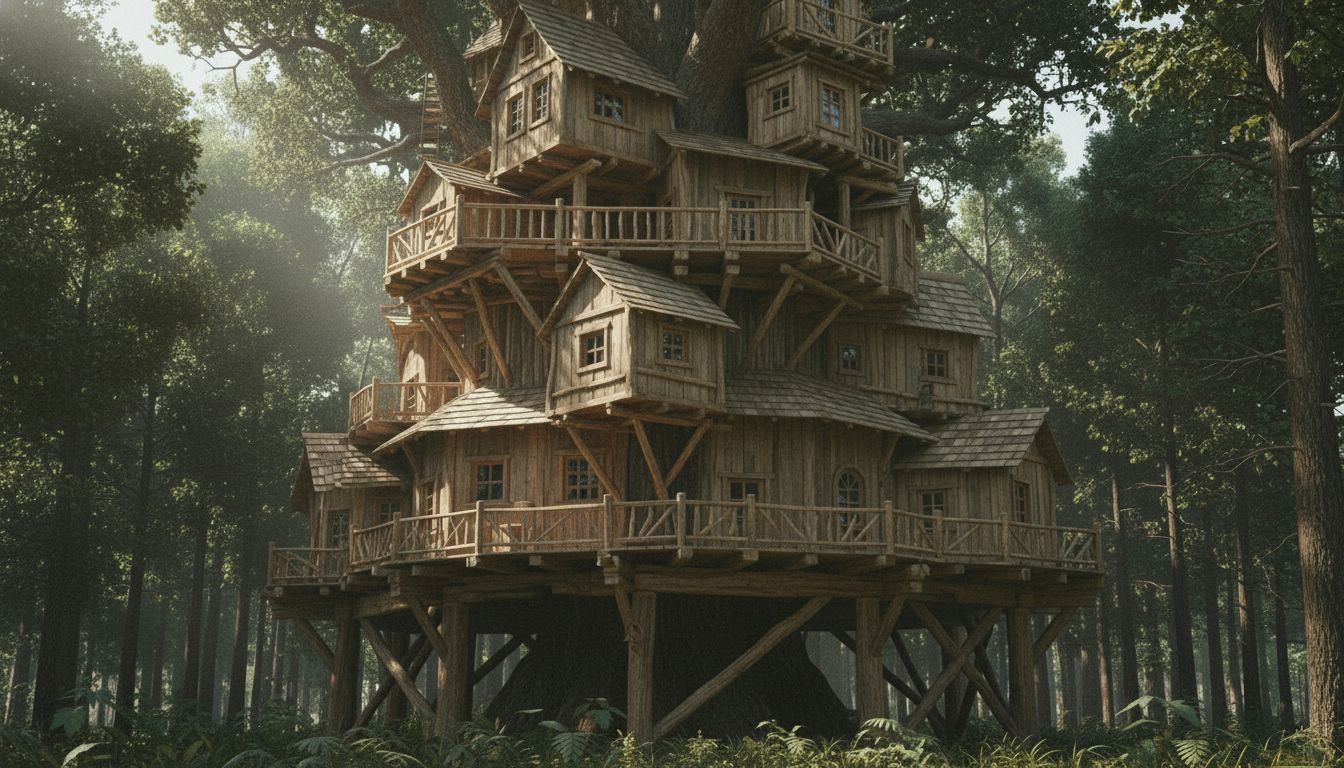
Burgess did not rely on a normal construction supply chain. Much of the wood came from salvaged barns, abandoned storage sheds, and garage tear-downs, with locals sometimes dropping off scrap lumber to help the project along. That flow of reused material fit the story he told about the treehouse almost too perfectly. It was built from leftovers, not luxury. In a world of expensive custom homes, this one grew from what other people had thrown away.
Nails by the Thousands
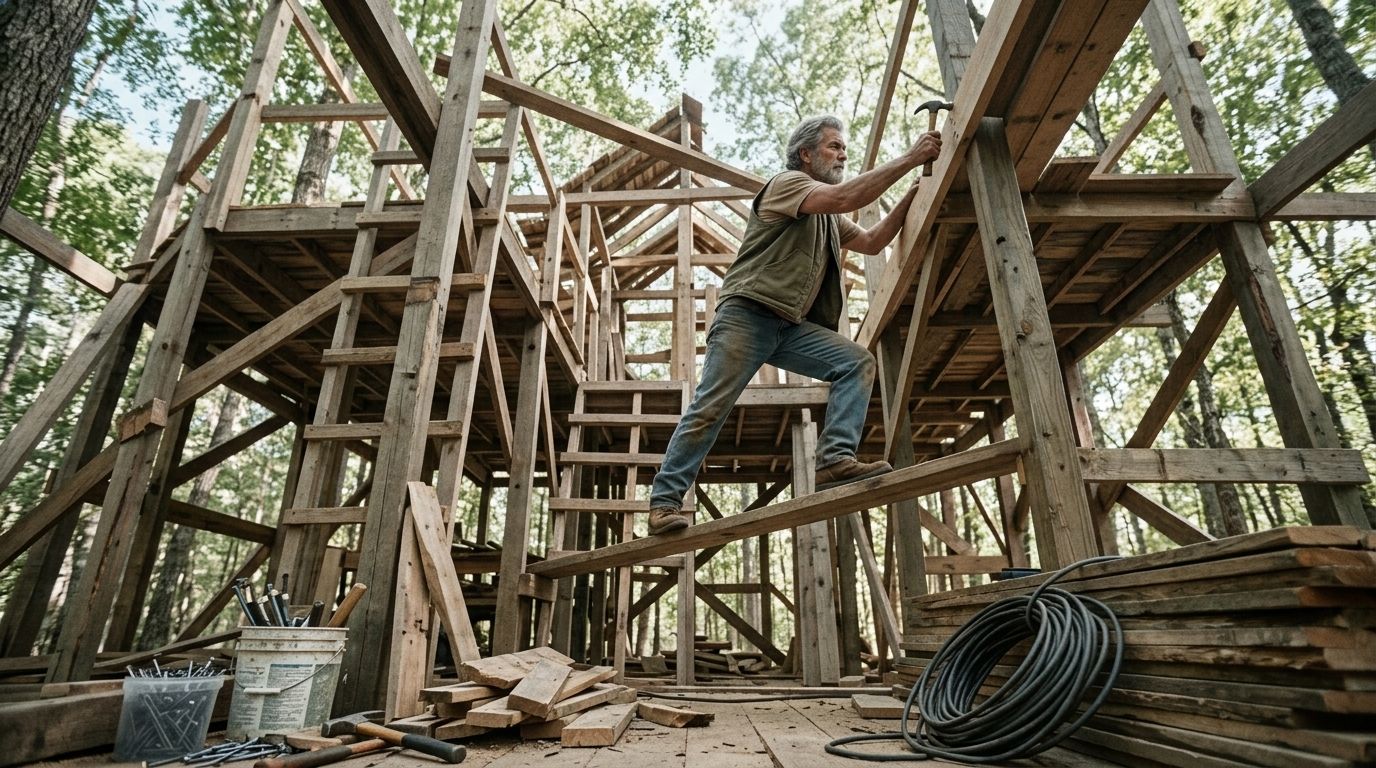
Holding all that scrap wood together took an extraordinary amount of hardware. Burgess estimated that he used 258,000 nails over the years, including 500 pounds of penny nails that he drove by hand. That number says as much about the labor as the size of the house. Every beam, stair, and landing required patience and repetition. Even in a structure this unusual, the work behind it was stubbornly physical.
A Remarkably Low Cost
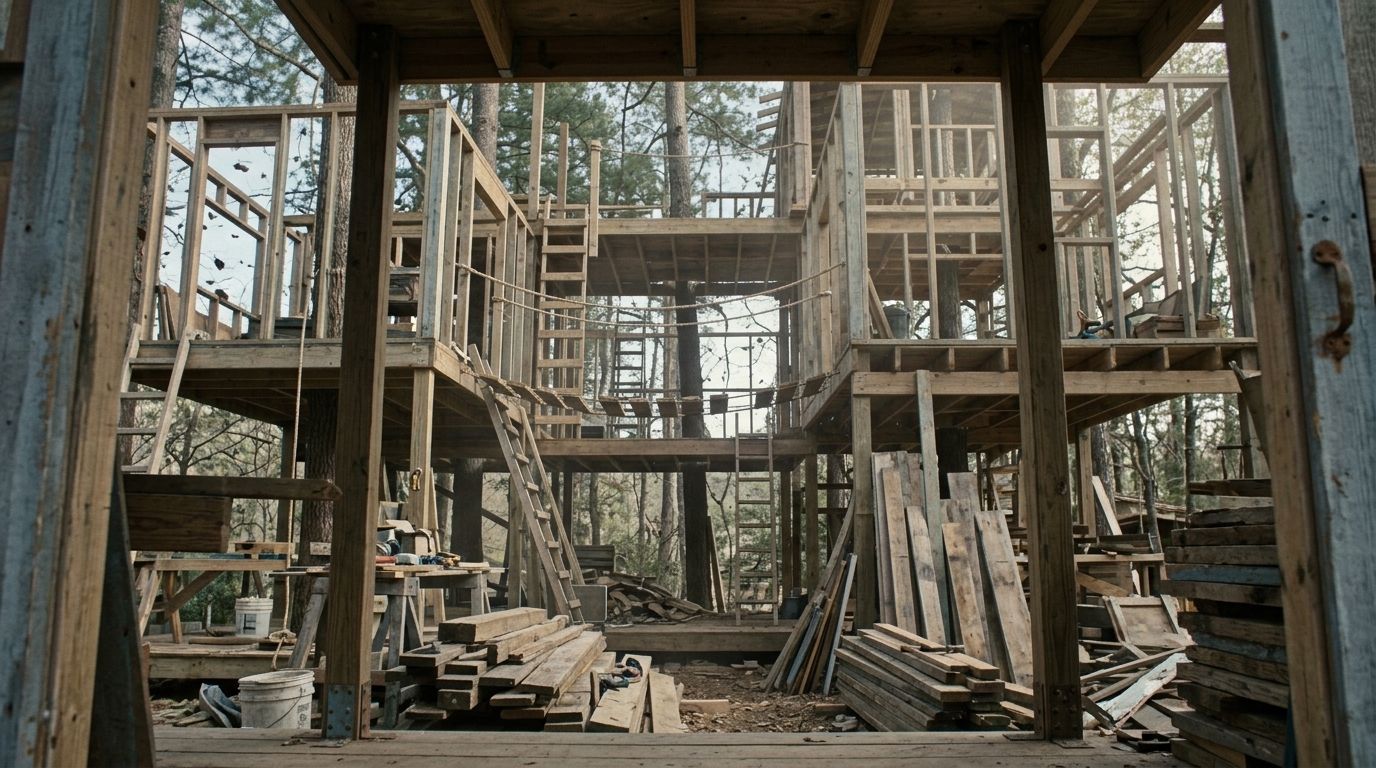
One of the most striking parts of the treehouse story is how little it reportedly cost. Because most of the wood was salvaged, recycled, or donated, Burgess spent only about $12,000 to $14,000 of his own money over many years. That is a tiny figure for a structure that reached ten stories and covered about 10,000 square feet. It made the treehouse feel even more improbable. Few projects this large ever come together on such a modest budget.
A Skyline in the Trees
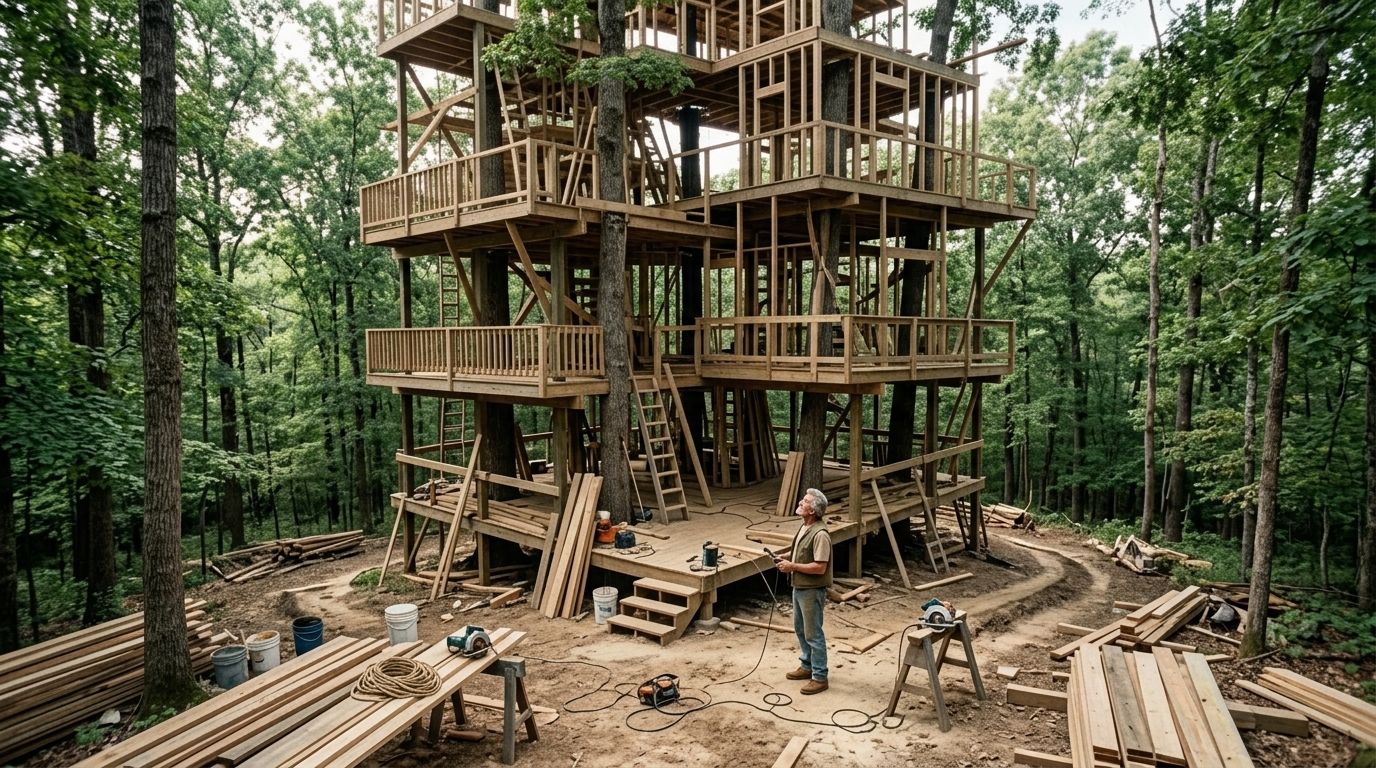
At its peak, the Minister's Treehouse rose to about 97 feet, placing it far above the surrounding canopy. It was officially described as 10 stories tall, which is enough to make even a traditional home feel small by comparison. From a distance, the structure looked less like a backyard project and more like a handmade skyline. The height added drama, but it also added risk. In the woods of Crossville, it stood out as an impossible vertical landmark.
A Maze of Rooms
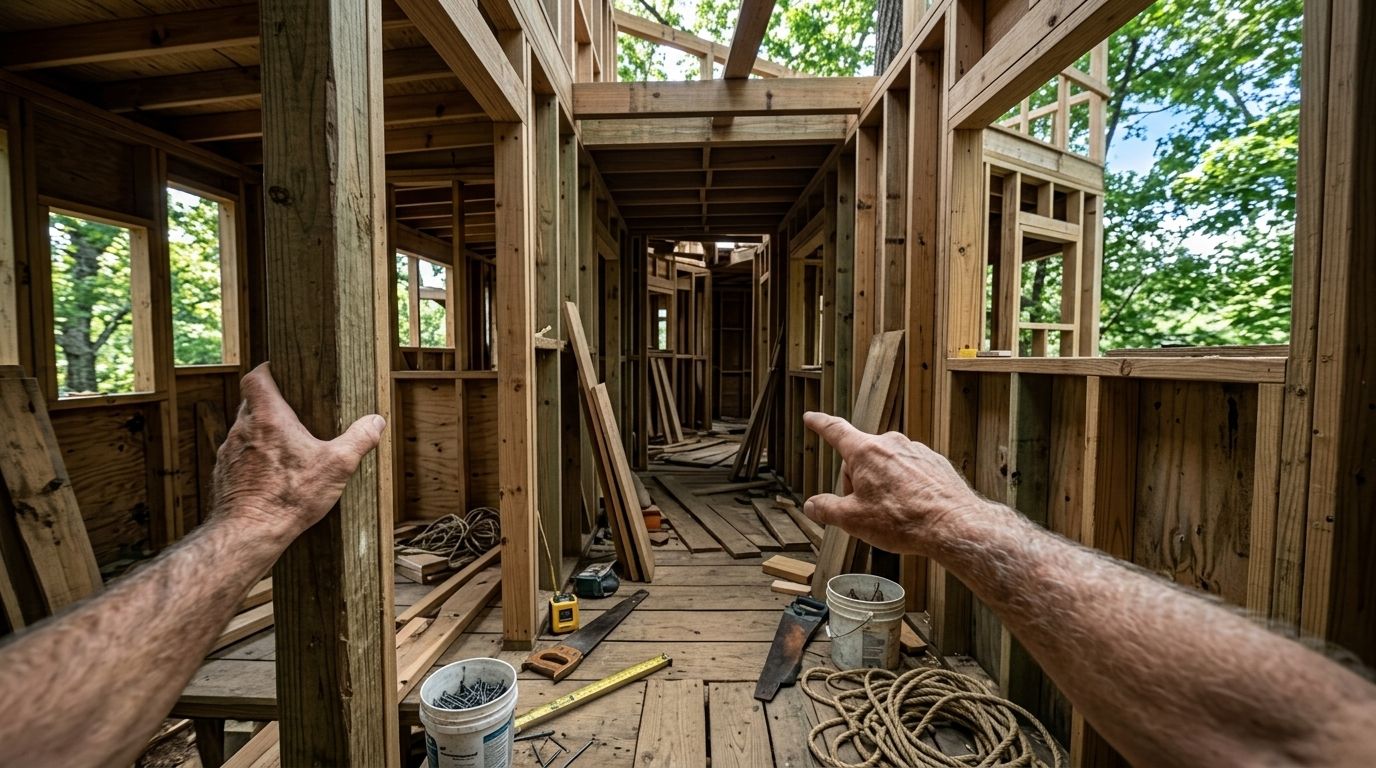
Inside, the treehouse was more labyrinth than house. Because Burgess kept adding to it without plans, the layout grew organically into an estimated 80 rooms. Visitors could wander through twisting corridors and sudden turns, discovering spaces that felt as though they had been stacked one after another by instinct alone. That kind of interior made the house part puzzle, part wonder. It was the opposite of a neatly designed home.
Porches on Every Level
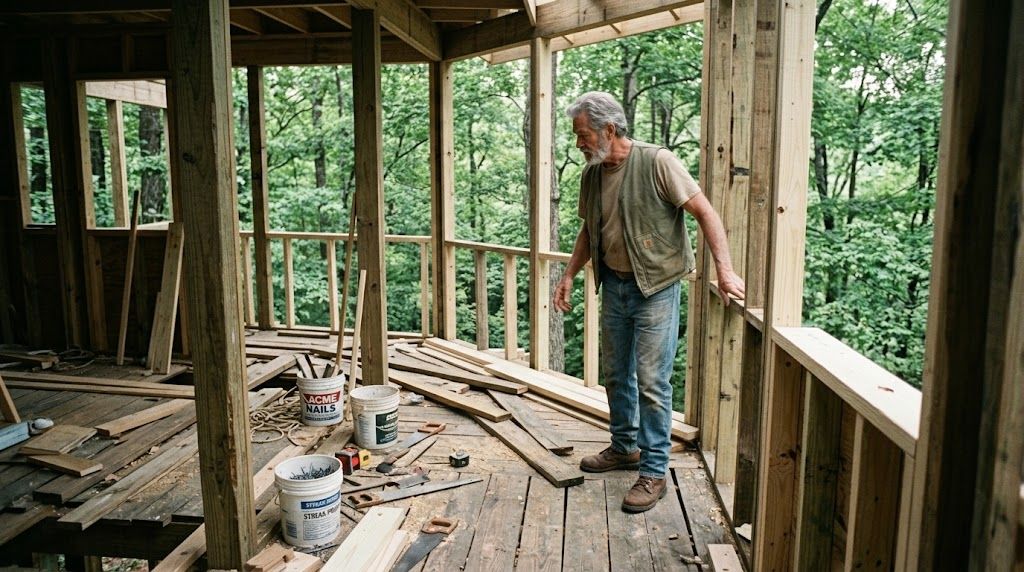
One of the gentler touches was the wrap-around porch on every level. Each floor was surrounded by a full 360-degree wooden deck, giving visitors room to step outside and take in the trees from above. The porches also softened the structure's rough edges, giving it a Southern, porch-lined character despite its wild shape. It was a practical addition, but it also added charm. In a house built from scraps, the decks made space for pause.
A Three-story Sanctuary
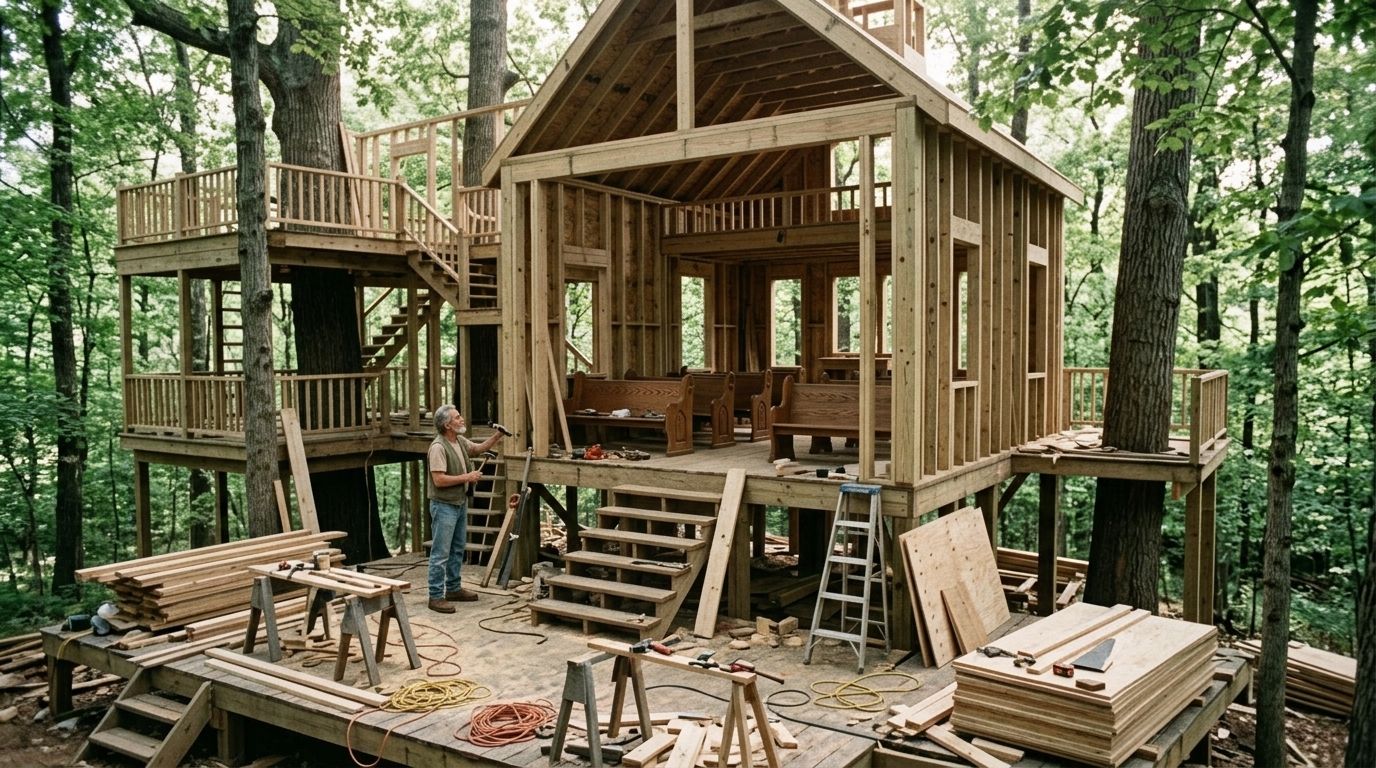
At the heart of the treehouse was a three-story sanctuary, the most important room in the whole structure. It was built as a functioning church space and included a choir loft and carved wooden pews. That detail tied the project directly to Burgess's life as a minister. The treehouse was not only a spectacle, but also a place of worship. For many visitors, that made it feel less like a novelty and more like a deeply personal expression of faith.
A Court Inside Church
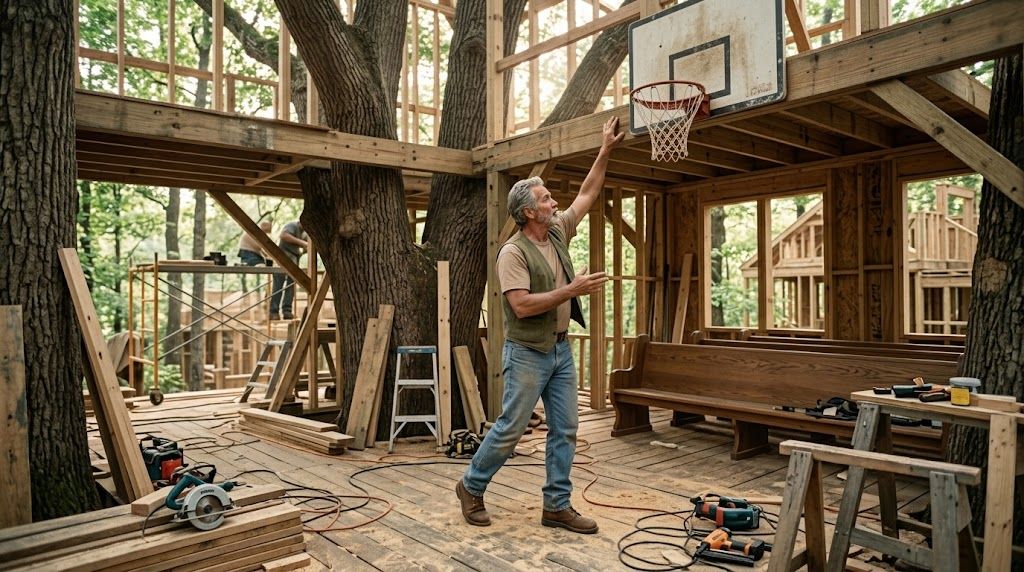
The sanctuary had a second life as well. Burgess installed a basketball hoop, and the same space that served as a church also doubled as an indoor court for local youth teams. That unusual pairing made the room even more memorable. On one day it could hold a service, and on another it could host a game. Few buildings manage to blend sacred and playful uses so naturally. In this treehouse, the two were part of the same community space.
Hidden Ways Up
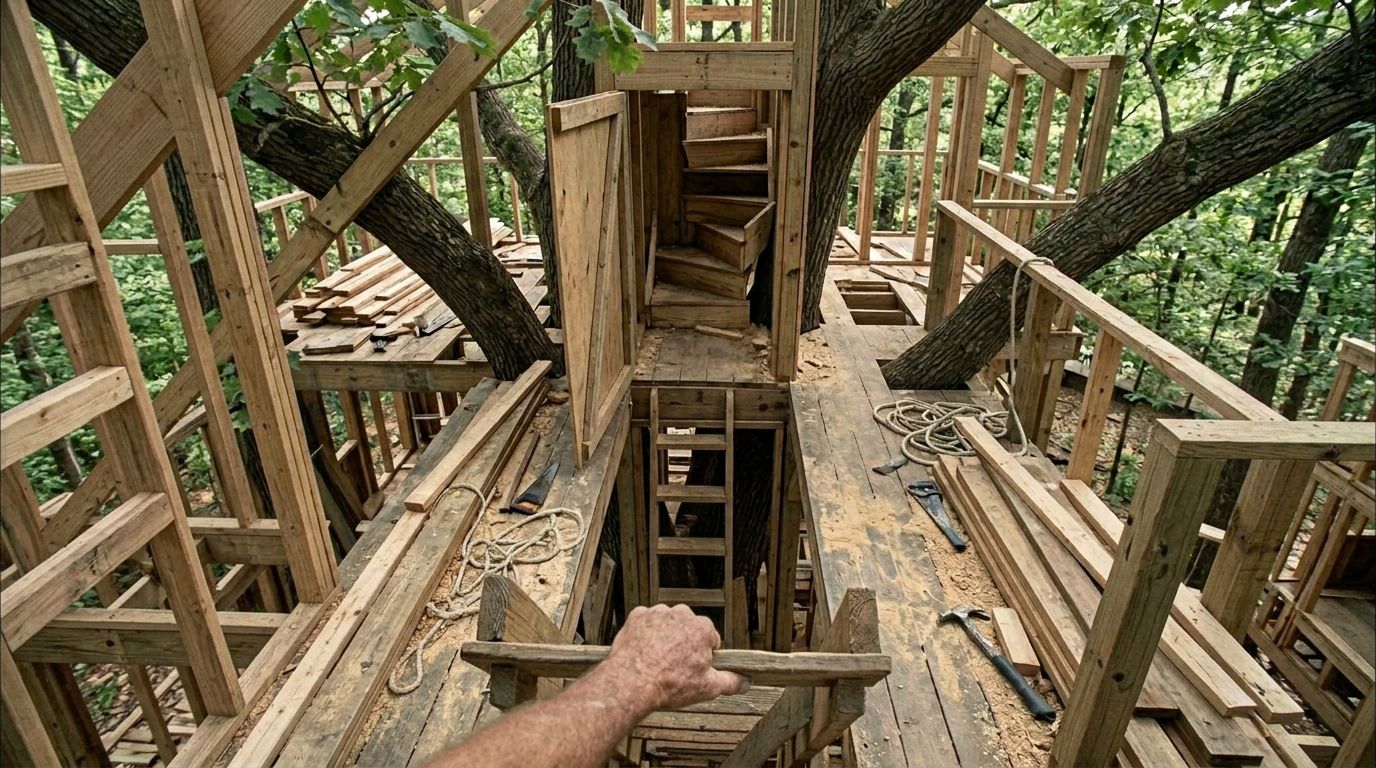
Moving through the structure was part of the experience. Burgess built secret staircases, sudden ladders, hidden trapdoors, and narrow catwalks that required visitors to climb, crawl, and carefully find their way forward. The whole place felt like a challenge wrapped in wood. There was no single obvious route through it, which made each visit feel slightly different. That unpredictability was part of its appeal.
A Room for His Wife
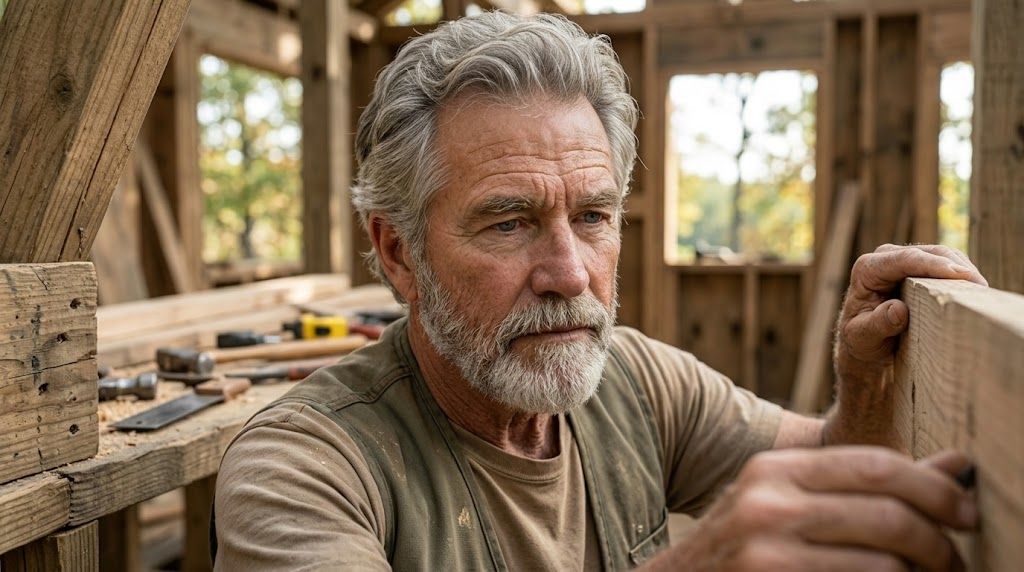
High up in the treehouse, Burgess created a private room for his wife as an 11th anniversary gift. Described as a small penthouse, it added a more intimate note to an otherwise enormous structure. After so much of the treehouse was open to visitors, this hidden space felt almost tender by comparison. It also showed that the project was not just about scale or faith. It was still, in part, a home.
The Buzzard's Roost
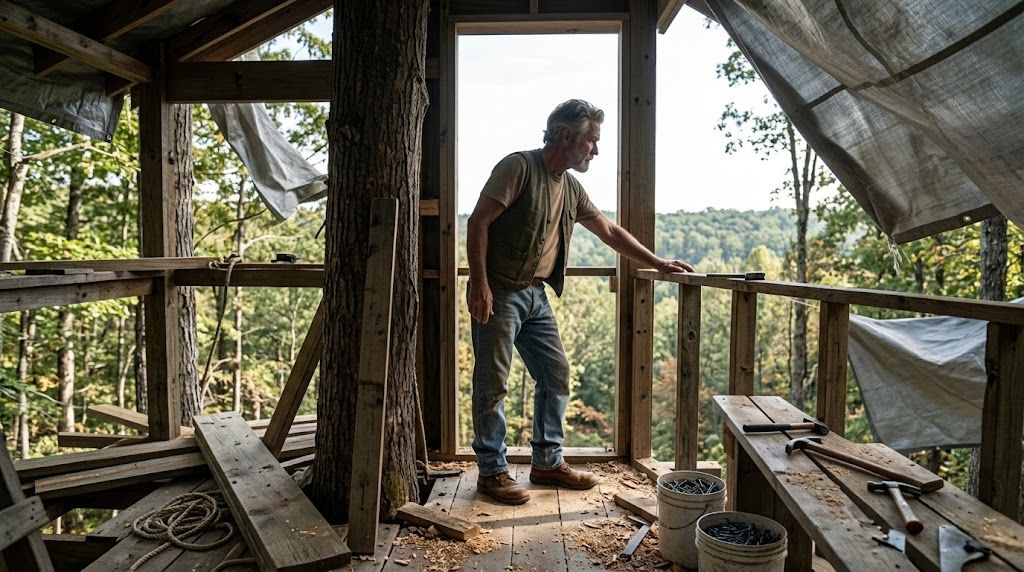
The highest point of the treehouse was known as the Buzzard's Roost. Visitors reached it by climbing 98 rickety wooden steps, and once they arrived, the tower was said to sway slightly in the wind. That detail must have made the climb feel all the more memorable. Standing there, high above the woods, would have delivered both a view and a reminder of how bold the structure really was. It was a peak built for courage.
Chimes in the Tower
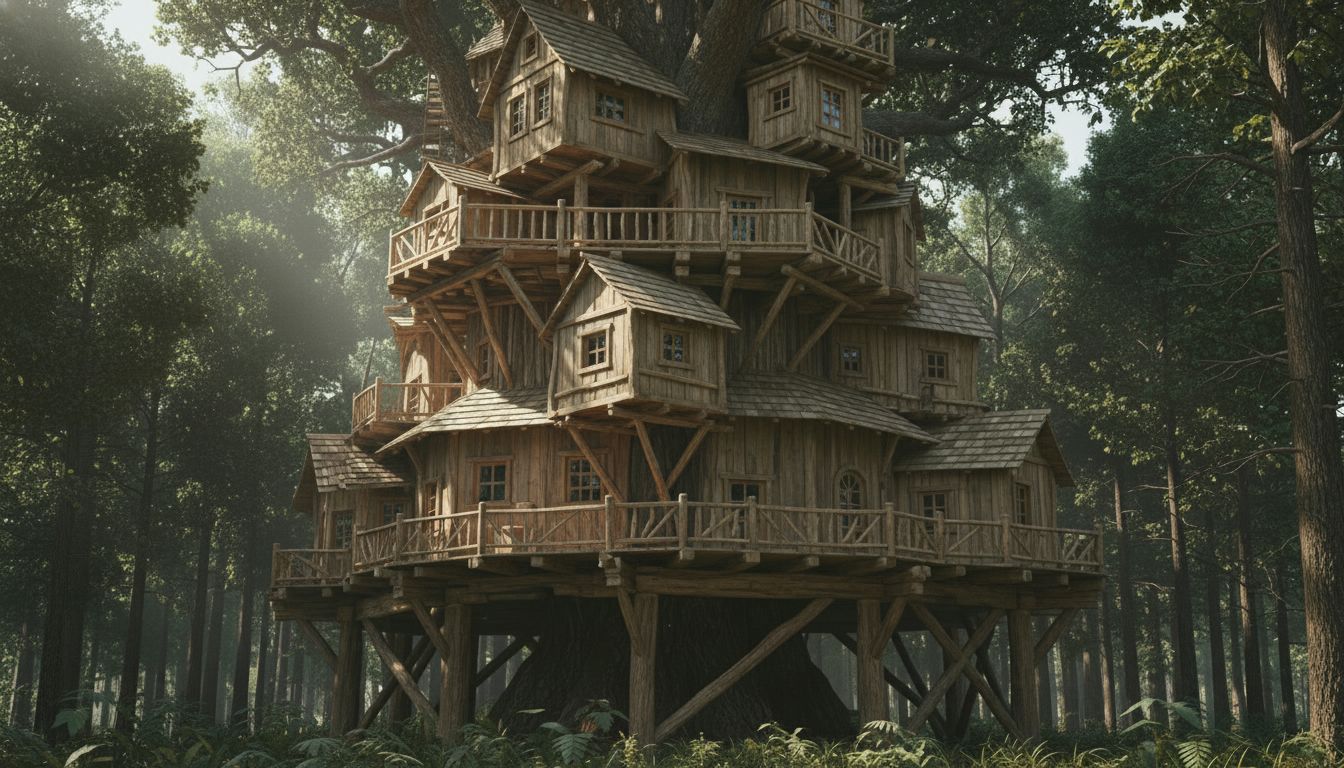
At the top of the tower, Burgess used repurposed oxygen acetylene tanks as makeshift bells. They hung from the belfry and chimed out across the Tennessee valley each day. The choice was practical, unusual, and in keeping with the rest of the house. Nothing about the treehouse followed a standard rulebook, so the bell tower did not either. Even its sounds came from discarded materials given a second life.
A Crown Above it All
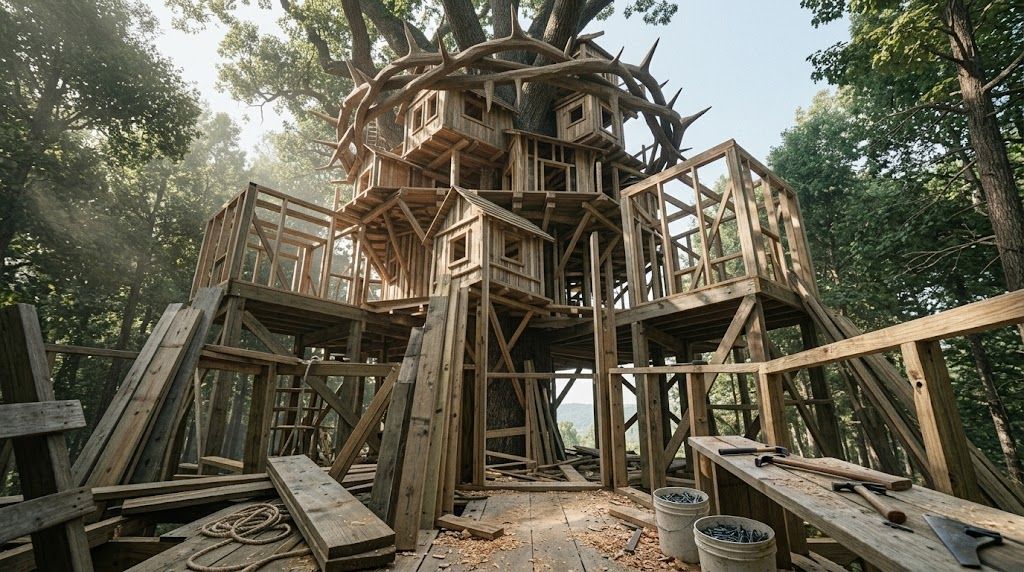
The exterior of the tower carried one of the treehouse's most recognizable details, a giant wooden crown of thorns. Hand-carved and dramatic, it reinforced the religious character of the entire project. From the ground, it gave the top of the treehouse a symbolically heavy silhouette. This was not just a quirky climbing tower. It was meant to carry meaning, even in its most decorative elements.
A Garden Hidden Below
The height of the treehouse also served a deliberate purpose. From the 10th-story balcony, visitors could look down into a nearby field where Burgess had planted flowers and grass so that the word JESUS could be seen from above. That kind of detail reveals how carefully he thought about the experience from the top down. It was part architecture, part message. The garden turned the landscape itself into a visible expression of faith.
A Wooden Bible Lost
Inside the sanctuary once stood a large wooden Bible carved as a centerpiece. It was a striking example of the folk-art quality that ran through the entire project. Over time, as the treehouse became better known, that piece was stolen. Its loss reflects the same tension that surrounded the structure as a whole, where admiration and disrespect often lived side by side. Even in a place meant for reflection, fame brought damage.
Open to All
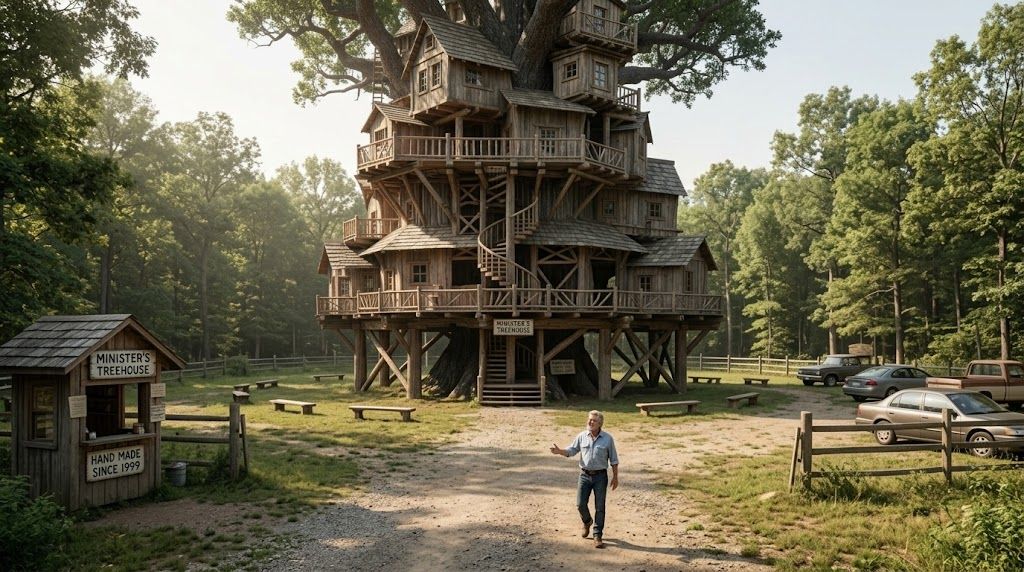
For years, Burgess kept the property open with almost no formal barriers. There were only two signs, one that said Welcome and another that said No Smoking. That simple approach reflected how he saw the place, not as a private attraction, but as God's house and a place for others to enter. The lack of hard limits helped the treehouse develop a rare kind of community spirit. It was open in both design and attitude.
Free to Visit
The treehouse drew thousands of visitors, some from far away, including Australia, yet Burgess never installed a ticket booth or charged admission. He believed the space should remain free for anyone looking for peace or connection. That choice made the treehouse feel unusually generous in a world of commercial attractions. It was not built to maximize revenue. It was built to be shared.
Weddings in the Trees
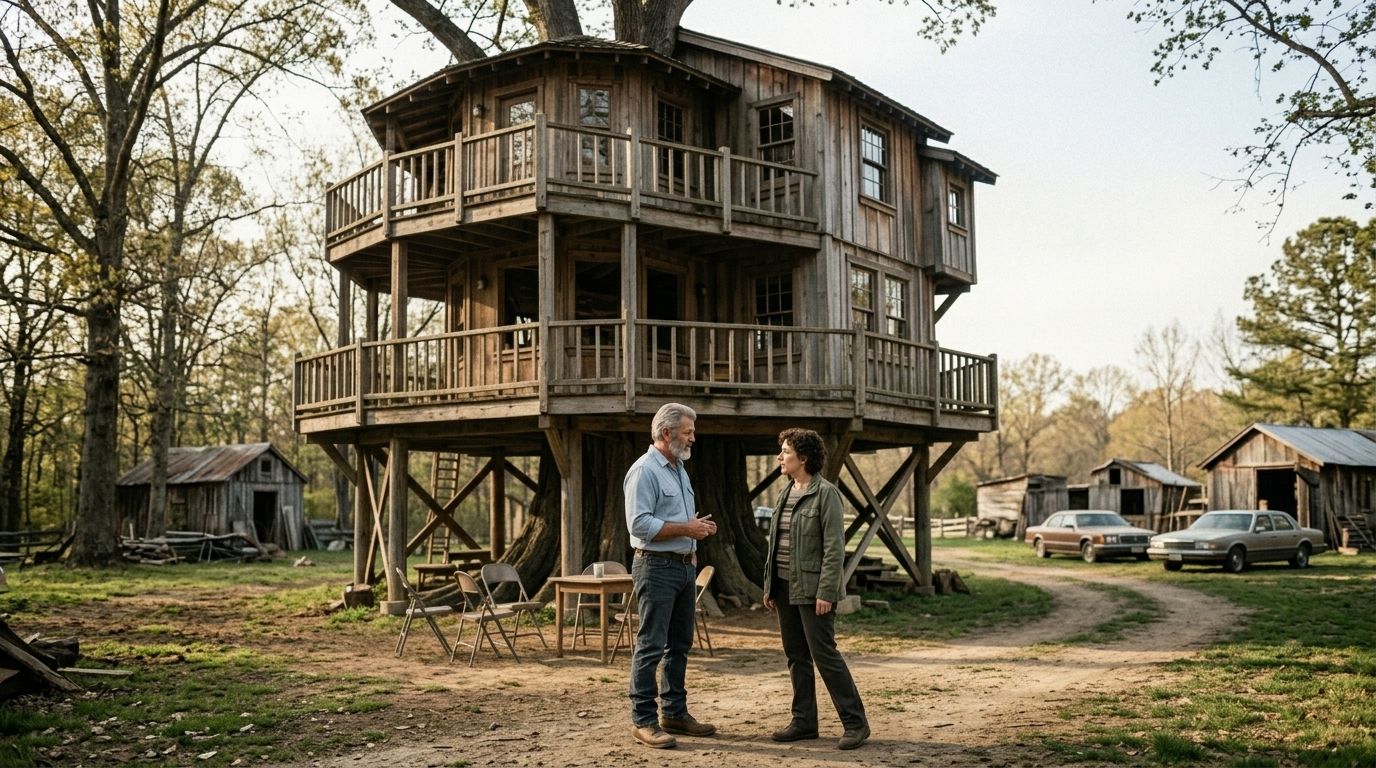
The sanctuary was not symbolic only. As an ordained minister, Burgess officiated 23 weddings there over the years. That gave the structure a real role in the lives of local couples and families. It was not just a destination for curious visitors, but a place where people marked major moments. That practical use helped explain why so many people cared about it. The treehouse was part landmark, part gathering place.
Names on the Walls
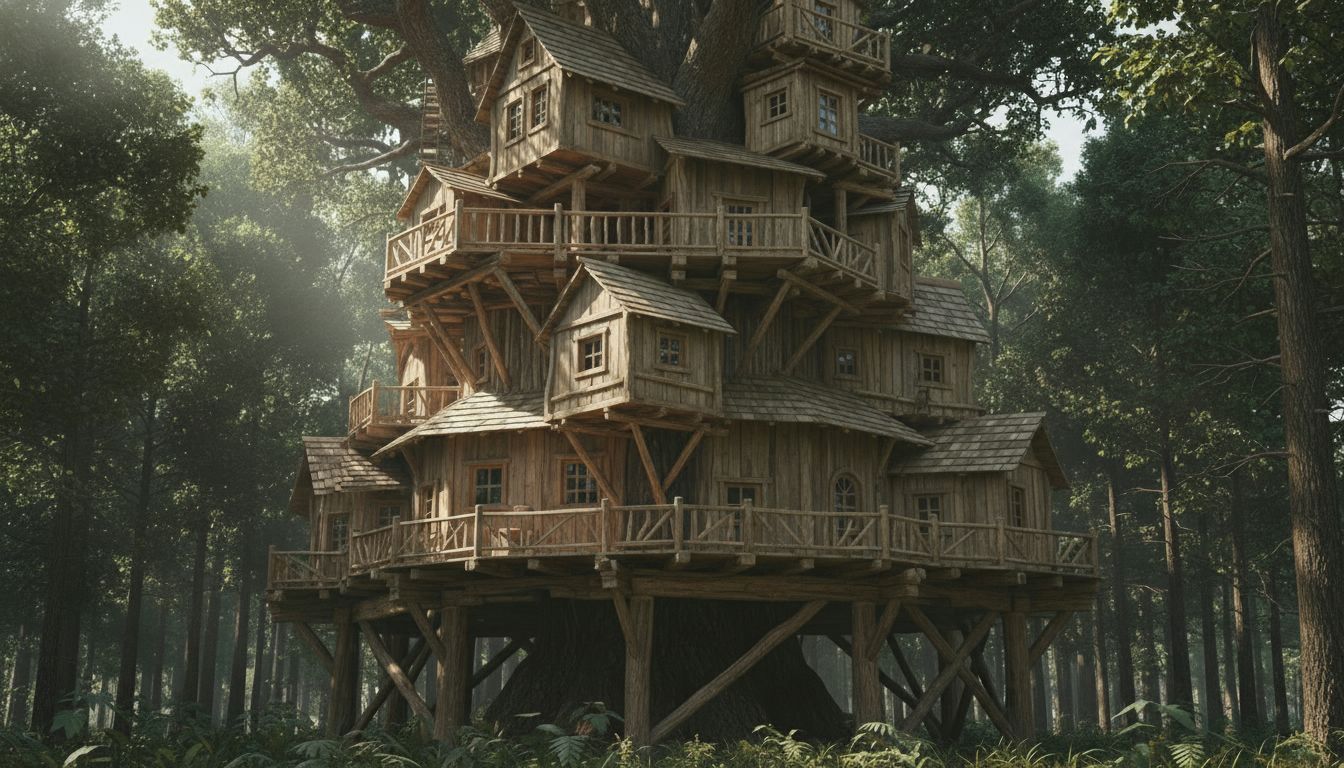
Unlike many property owners, Burgess did not immediately reject graffiti. Visitors carved names, wrote prayers, and left messages on the walls, and he said he viewed them as people leaving their peace behind. That attitude turned the rough wood into a kind of public record. Each mark added another layer to the story of the house and the people who passed through it. It was a messy form of participation, but also a human one.
Largest in the World
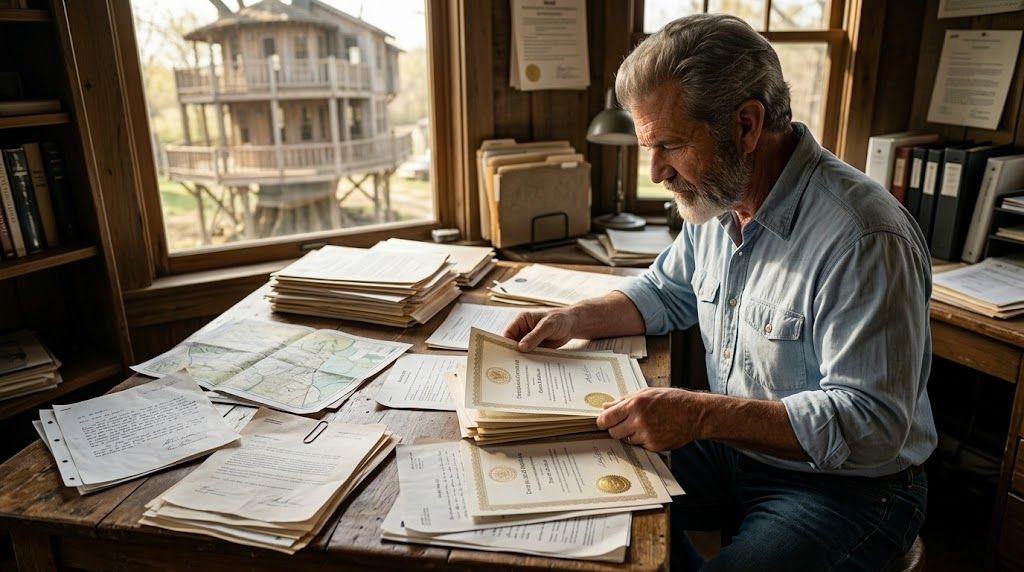
By 2012, the treehouse had gained enough attention to be recognized as a record-setting structure. Reports said Guinness officials confirmed its status, and Pete Nelson of Treehouse Masters called it by far the largest in the world. That recognition gave the project a new kind of legitimacy. What had started as a private act of faith was now being discussed in a wider architectural conversation. The treehouse had crossed from local oddity into public landmark.
The Closure Order
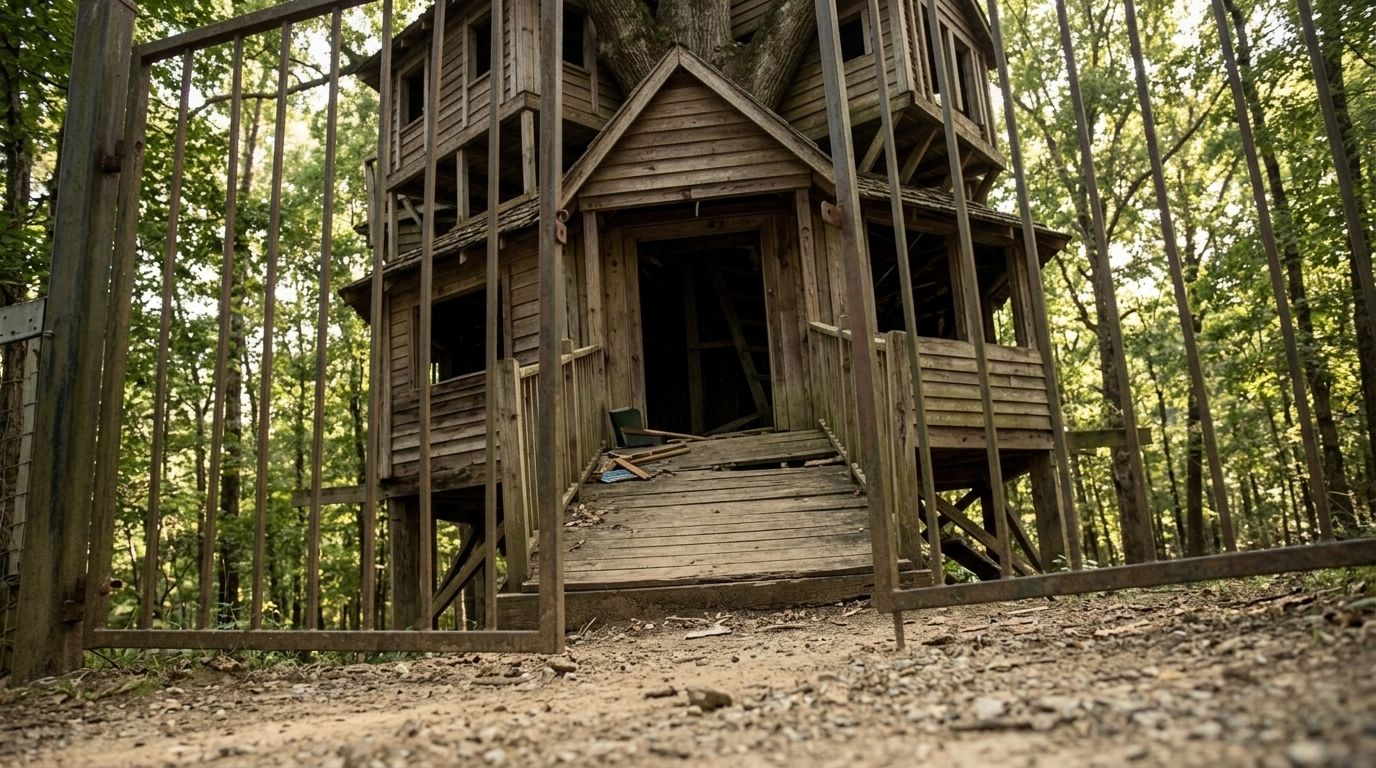
As the treehouse drew more and more visitors, officials began to worry about safety. In August 2012, the Tennessee Fire Marshal ordered it permanently closed to the public and described it as a deathtrap. The decision marked a major turning point for Burgess and for the structure itself. What had once felt open and welcoming was suddenly treated as a liability. The house had become too large, too visible, and too difficult to ignore.
Above the Legal Limit
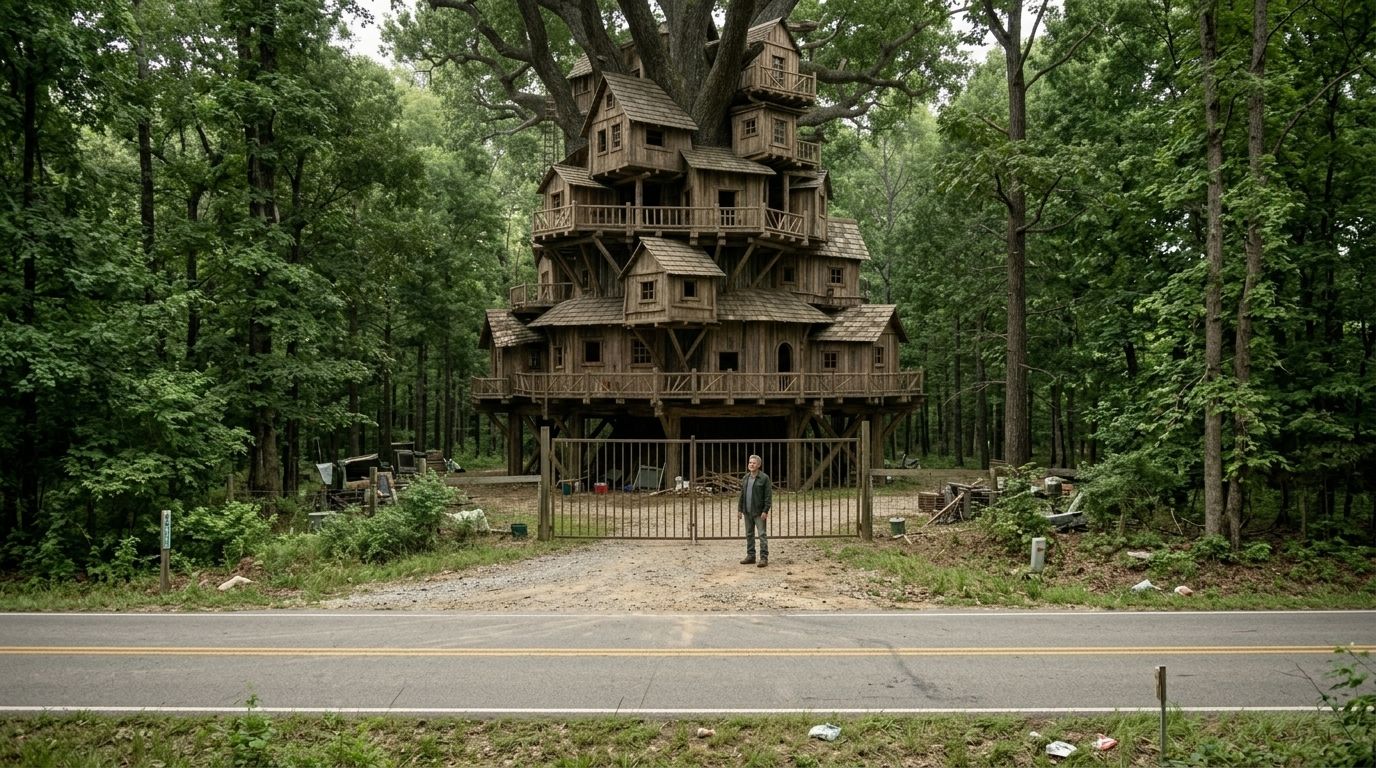
The closure was tied in part to zoning concerns. At 97 feet tall, the treehouse stood far above the 60-foot height limit for local structures of its type, and it also lacked fire alarms and sprinklers. Those facts made the state's position easier to understand, even if the decision disappointed many admirers. The house had grown beyond what the rules were designed to handle. Its size was part of the wonder, and also part of the problem.
The Vibe Changes
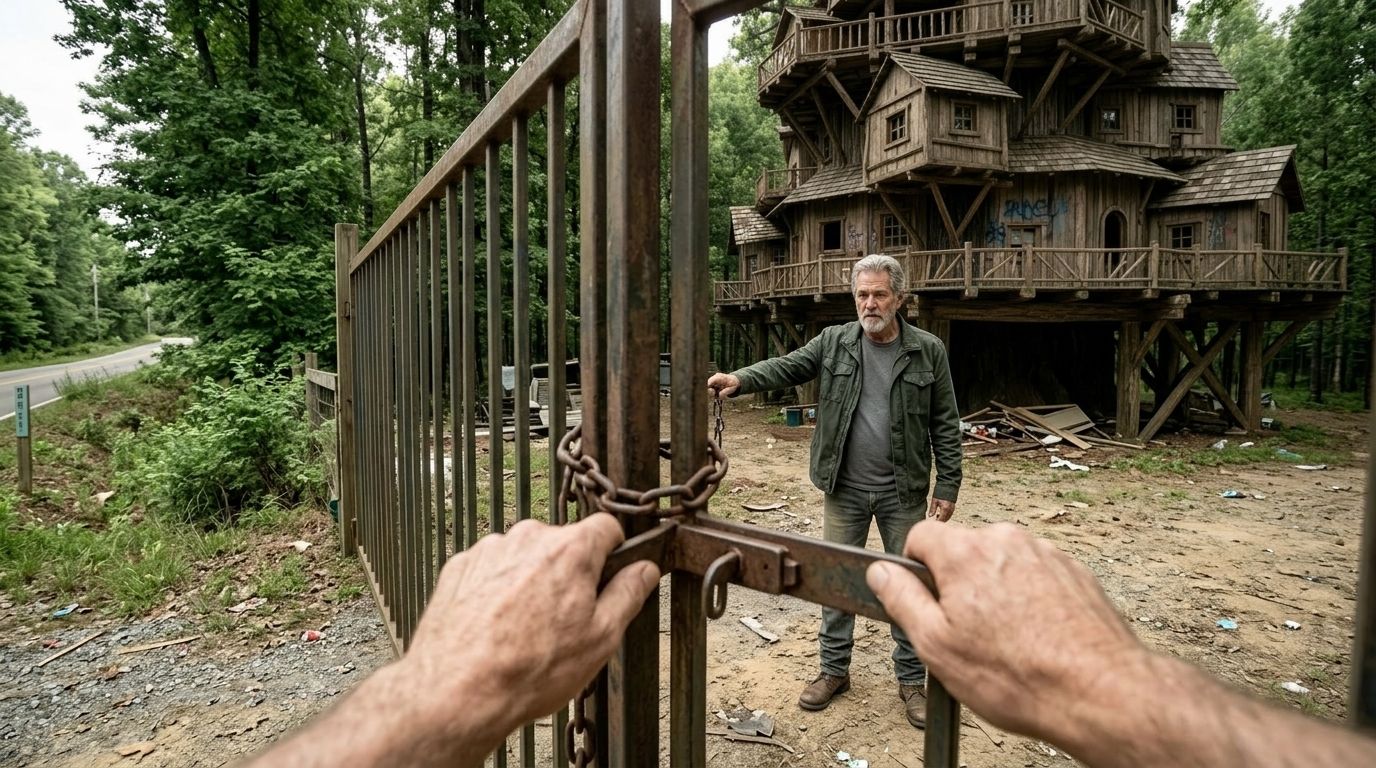
Once Burgess was forced to lock the gates, the property's energy changed quickly. Curious visitors gave way to trespassers, vandals, and other intruders who damaged windows, ripped out flooring, threw furniture from balconies, and covered the wood with graffiti. The treehouse that had once welcomed people became harder to protect with each passing month. It is a familiar pattern for abandoned places, but here it felt especially sad. The structure had lost the person who had cared for it most.
A Weekly Headache
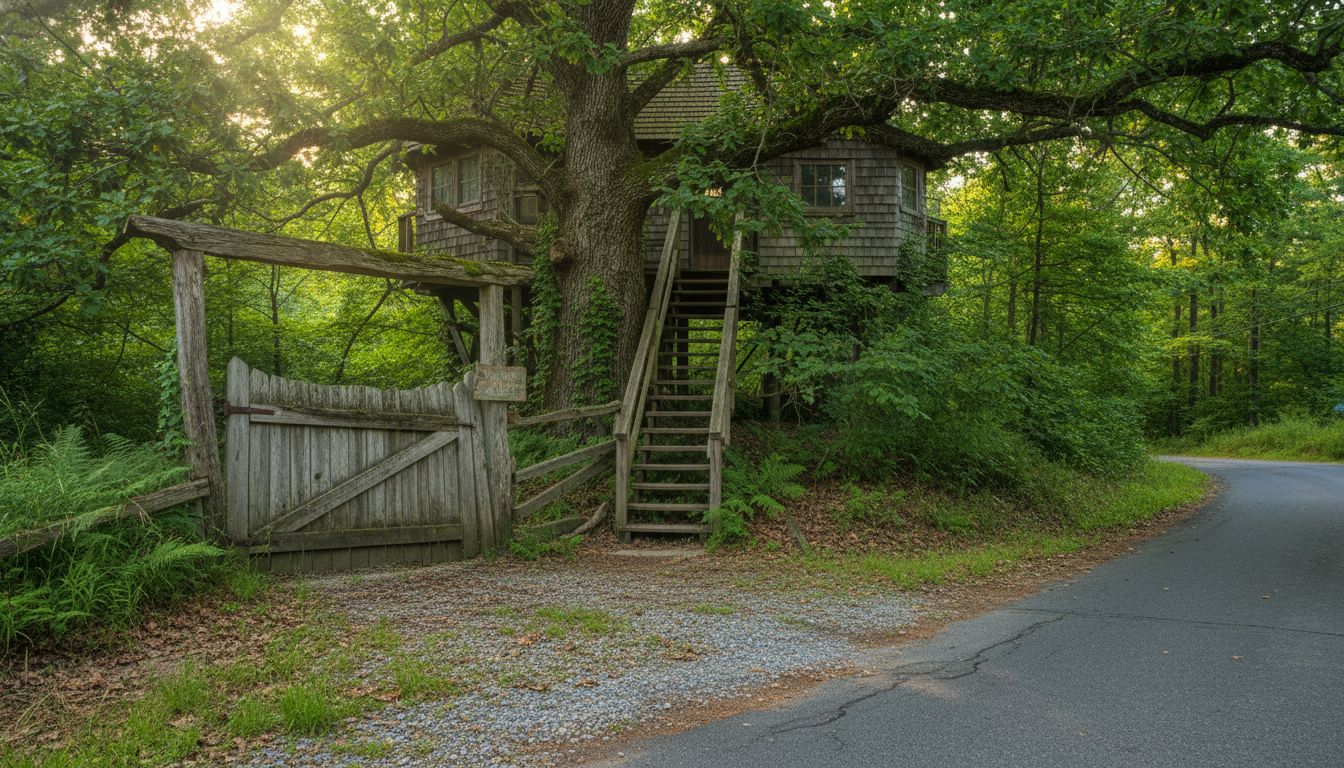
The treehouse also became a frequent problem for law enforcement. Reports said the sheriff's office had to respond four to six times a week to chase away intruders, squatters, and vandals. That kind of attention turned the landmark into a burden for the town as well as for Burgess. It was no longer simply a strange attraction in the woods. It had become an ongoing public safety concern.
Selling the Land
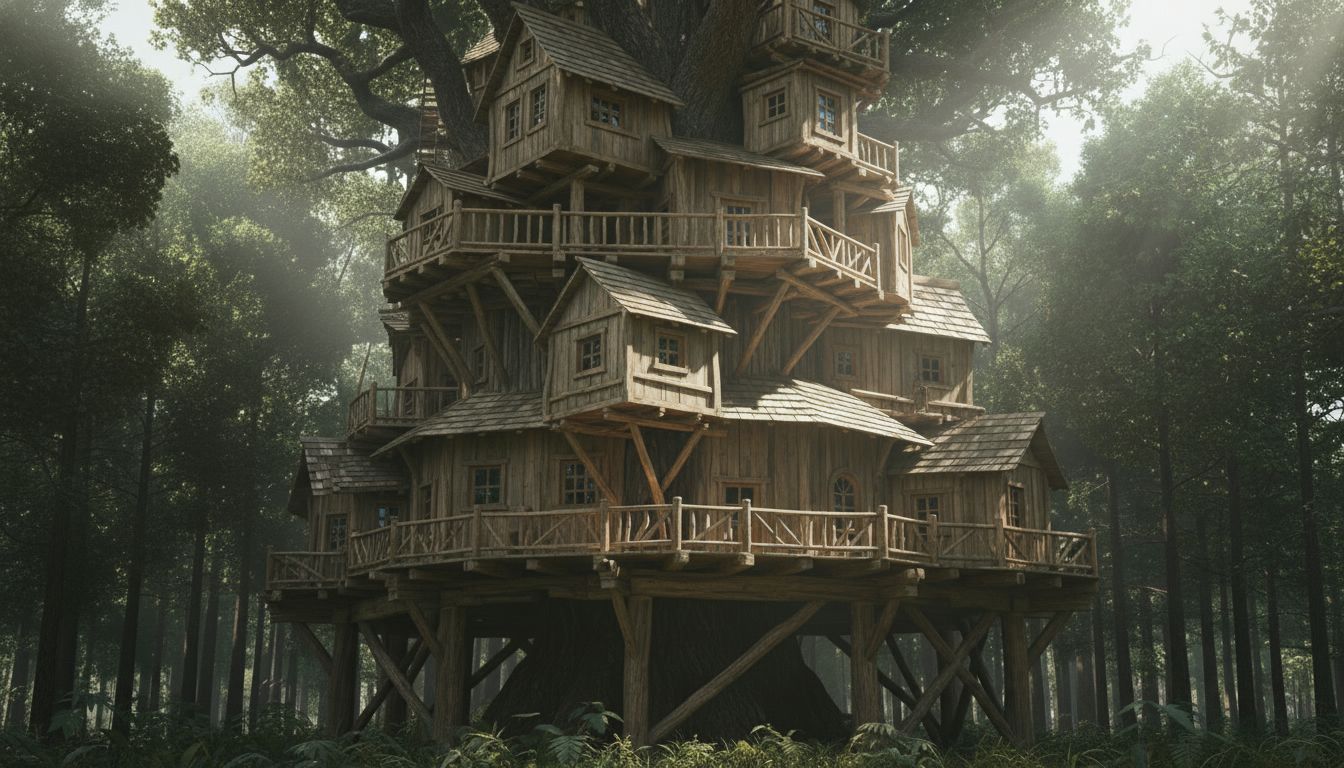
Eventually, the strain proved too much. Burgess sold the land, saying the repairs and fire code work would have cost millions, and the new owner, Glen Clark, said he would not tear the structure down. That decision closed one chapter and opened another, but it did not restore the treehouse to its former life. Ownership changed, yet the vulnerability remained. The future of the landmark still felt uncertain.
The Night of the Fire
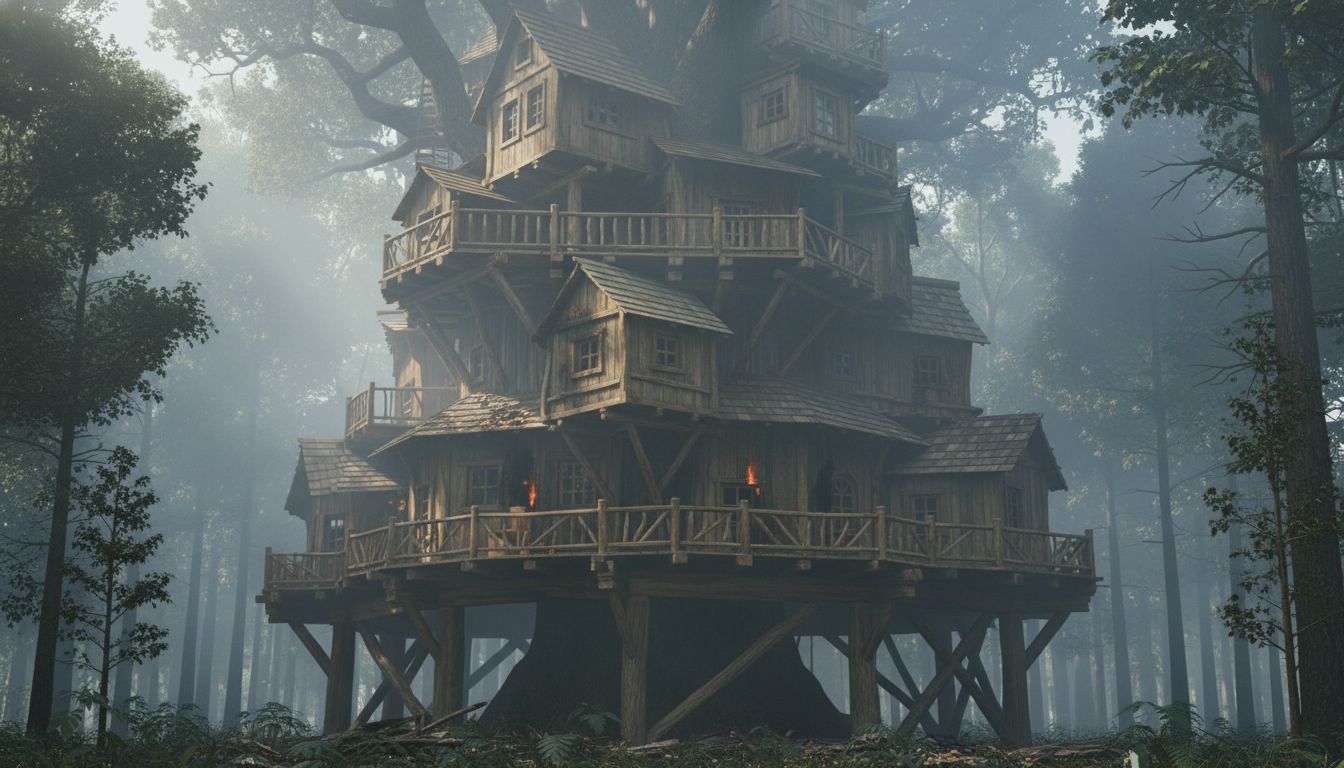
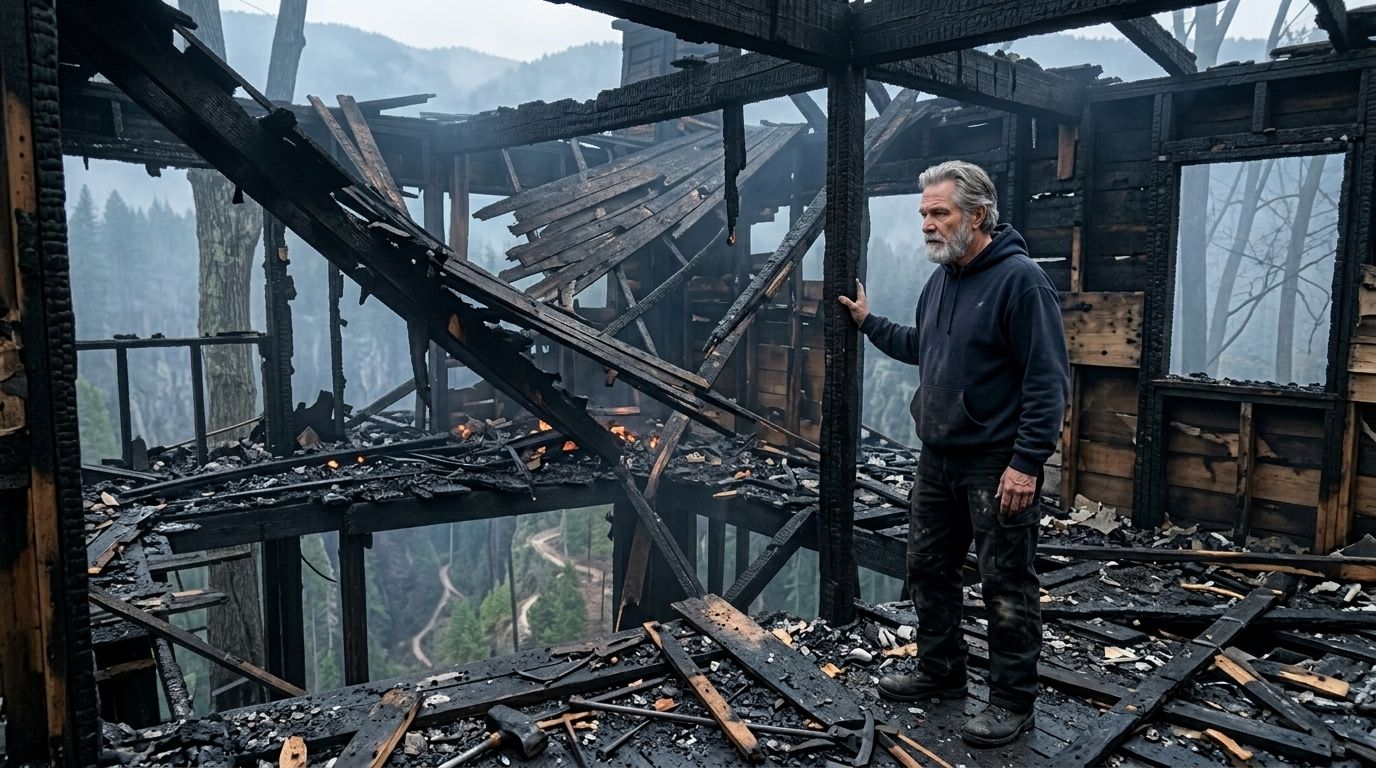
On October 22, 2019, tragedy arrived late in the evening. At about 10:30 p.m., fire broke out at the treehouse, and the dry scrap wood allowed the blaze to spread with alarming speed. What had once been a towering, intricate structure was suddenly at the mercy of flames. The scene was as dramatic as the house itself had been. In moments, years of work began to disappear.
Fifteen Minutes

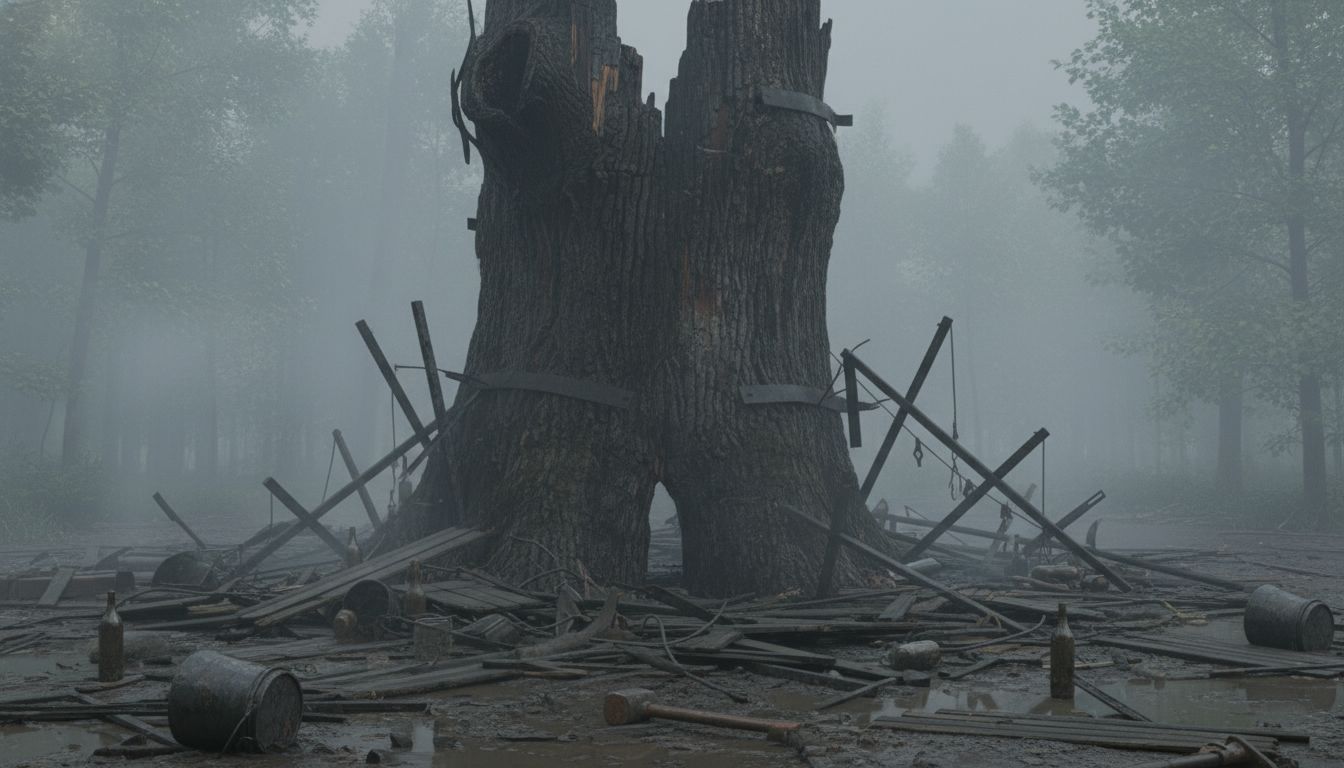
The destruction was astonishingly fast. From the moment the fire started, it took less than 15 minutes for the 10-story, 10,000-square-foot structure to collapse into ashes. That pace is hard to absorb when set against the years Burgess spent building it piece by piece. The house that had taken nearly two decades to rise was gone in a flash. The contrast made the loss feel even more severe.
Too Hot to Reach
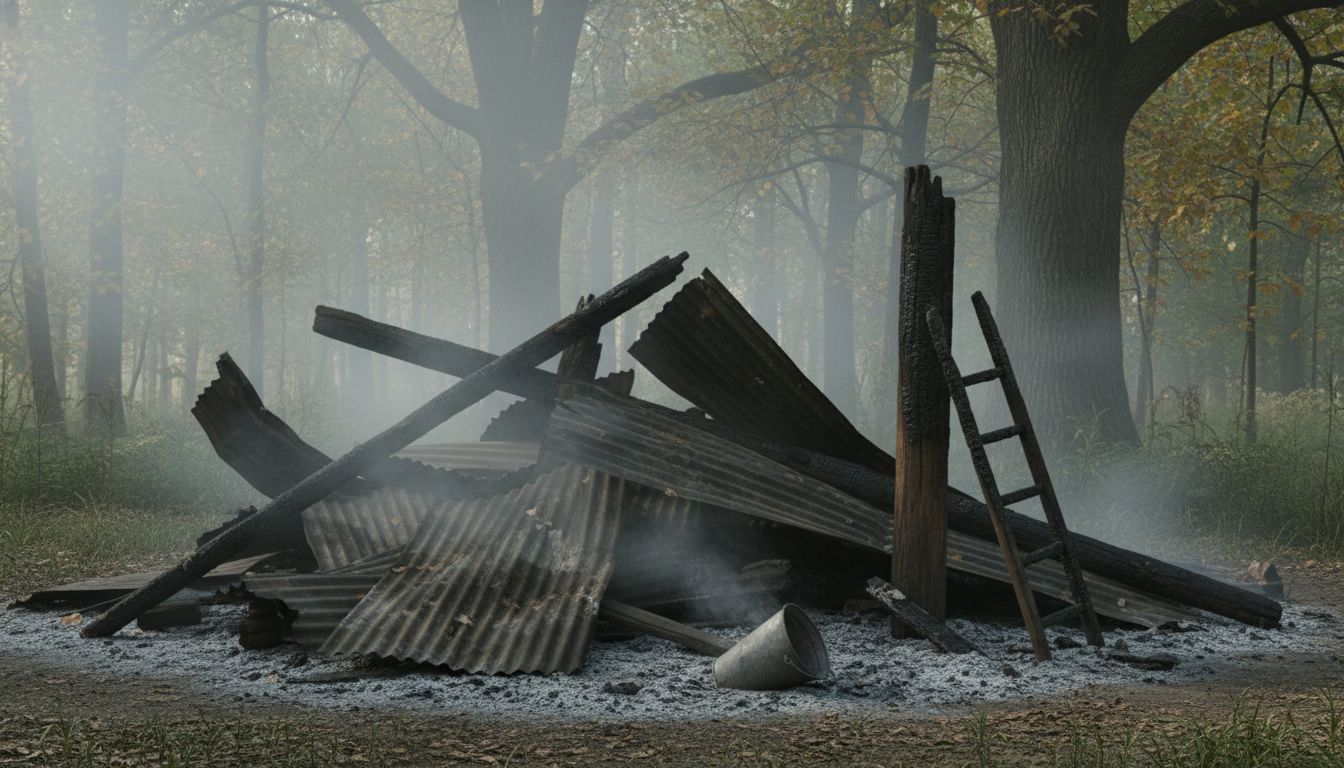
By the time the Cumberland County Fire Department arrived, there was little left to do. The blaze was so intense that fire trucks had to park 500 yards away to stay clear of the heat. That detail captures just how completely the fire had taken over the site. There was no structure left to save, only the aftermath of a fierce and fast-moving collapse. The scale of the heat matched the scale of the house itself.
An Unresolved Ending
Because there was no electricity at the treehouse and no lightning storm that night, many locals suspected arson by trespassing youths. But the site was uninsured and already abandoned, so no official investigation was opened. That left the cause unresolved, which only deepened the sense of loss around the story. The treehouse did not get a neat ending. It simply became a charred reminder of something that once stood alone in the woods.
Burgess Takes it Calmly

Horace Burgess did not react the way many people expected. While others mourned the landmark, he said he felt relieved and described the treehouse as something that had always been a pain. He also remarked that many of the weddings he had officiated there had not lasted anyway. The comment was surprising, but it fit the odd, unsentimental honesty that had always surrounded him. In his view, the structure had outlived its useful season.
What it Meant
The story of the Minister's Treehouse lasts because it is more than a curiosity. It was built from faith, salvage, persistence, and an unusual willingness to ignore the expected way things are done. It also became a community place, a record of visitors, and a symbol of one man's imagination. That combination is rare. Most homes are designed to disappear into daily life, while this one was meant to be noticed.
A Handmade Landmark
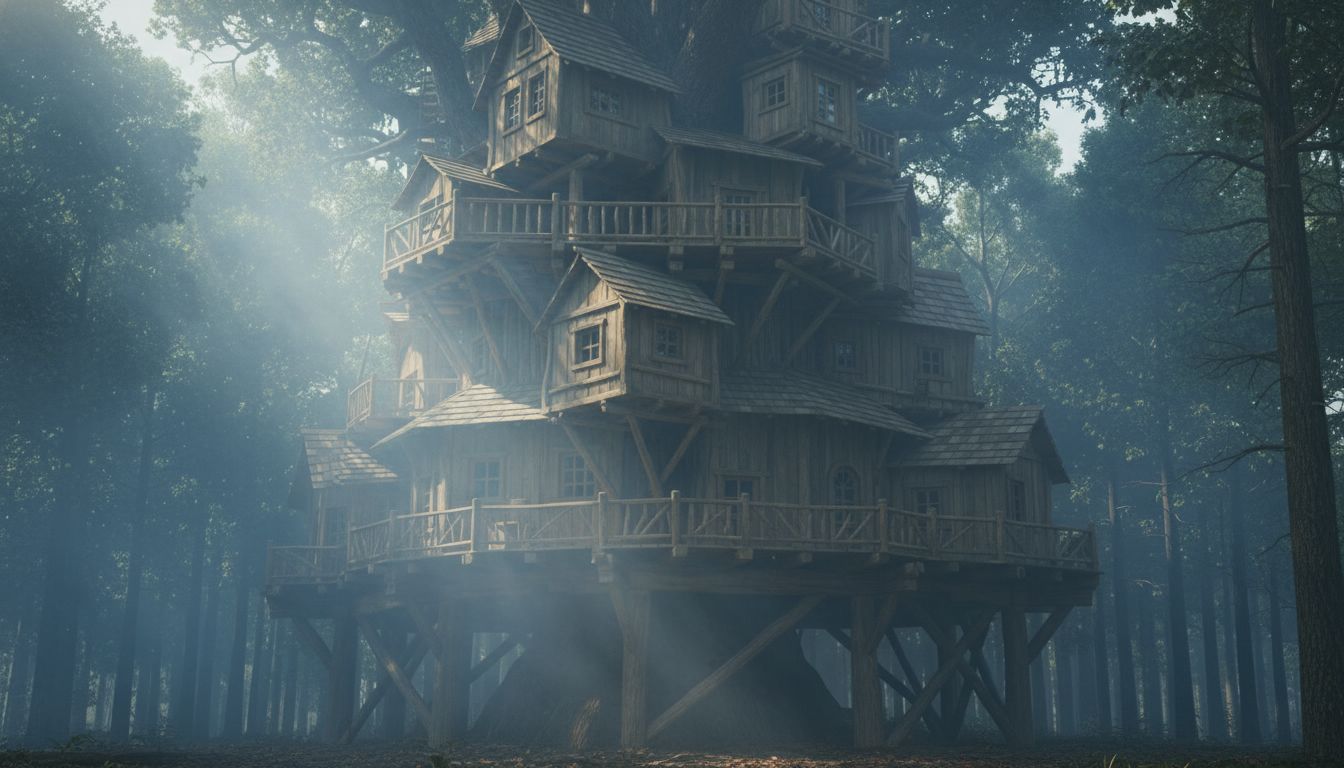
Even after its destruction, the treehouse remains one of the most striking examples of outsider architecture in the United States. Its details still read like a list of impossible choices that somehow worked together. A church, a basketball court, secret stairs, porches, a tower, and a living foundation all belonged to the same structure. That kind of ambition is hard to forget. It is why the treehouse kept drawing attention long after people had seen photographs of it.
Built on Belief
There was never anything neutral about the project. Burgess treated the treehouse as a response to a calling, and that belief shaped every board and nail that went into it. Whether people saw it as devotion, art, or obsession, they were reacting to the same thing: a man who kept building because he believed he was meant to. That conviction gave the house its identity. It was never just a pile of wood.
Why it Still Stands Out
Stories like this tend to linger because they feel both impossible and familiar. Many people have imagined a giant treehouse at some point, but almost no one has the patience, materials, or determination to actually create one. Burgess did, and he did it on a small budget with salvaged wood and years of labor. That mix of childhood wonder and hard physical work is what makes the story resonate. It felt homemade in the deepest sense.
Ashes and Memory
In the end, the Minister's Treehouse became something like a memory made visible. It rose from one man's vision, welcomed a community, drew official attention, and then burned away in a matter of minutes. What remains is the outline of a remarkable idea and the photographs that prove it existed. Burgess may have called it a pain, but to many others it was a rare kind of landmark. Even gone, it still feels larger than ordinary life.