Insiders Reveal What Put Zoe Saldaña, Ralph Lauren And Oprah Winfrey On TIME100
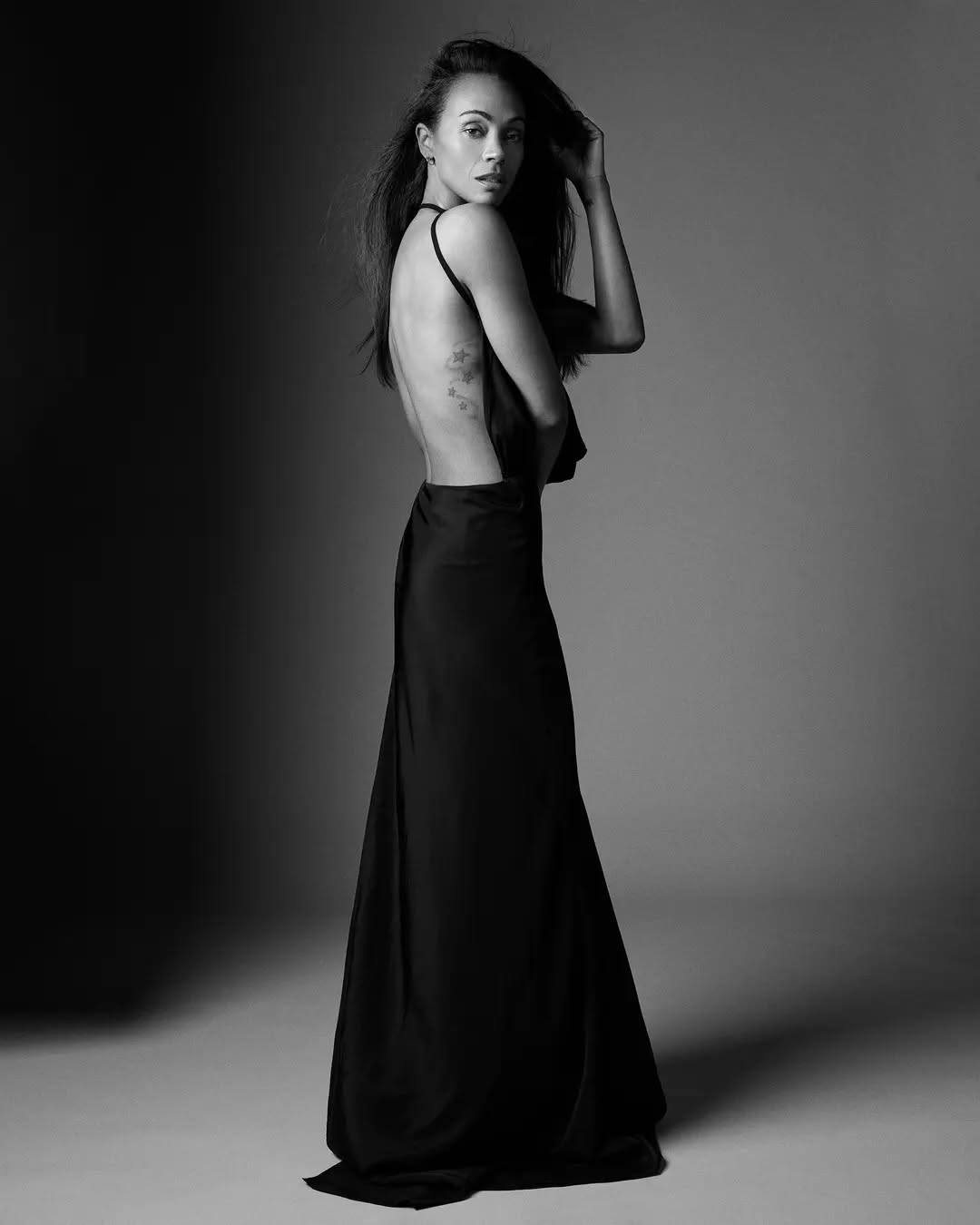
TIME’s annual TIME100 list always offers a snapshot of who is shaping culture right now, and this year’s recognition of Zoe Saldaña, Ralph Lauren and Oprah Winfrey gives the honor a particularly wide reach. Saldaña, who said she was honored and humbled to be included in April 2026, represents a kind of modern movie stardom built on franchise power, discipline and growing public visibility. Lauren stands for a far longer American story, one that began with neckties in a single drawer and grew into a fashion house that helped define the country’s style vocabulary. Winfrey, meanwhile, remains a benchmark for media influence, a voice whose trust and reach have outlasted every passing platform. Put together, the three honorees show how cultural power can come from performance, design and platform, each in a different register, each with staying power that goes well beyond any single headline. Saldaña’s TIME100 moment is the best place to start.
Saldaña’s TIME100 recognition
In her April 15, 2026 Instagram post, Zoe Saldaña called her TIME100 inclusion an immense honor and said she felt grateful and humbled to be among such an accomplished group. The tone matched the public image she has cultivated for years, one that pairs star power with a low-key sense of gratitude. At 47, Saldaña has moved well beyond the idea of being simply a genre actor, even though science fiction and fantasy franchises helped make her a global name. The TIME recognition fits that broader arc, placing her among figures whose influence extends past any one role or red-carpet moment. It also raises a familiar question in her career: how did she become one of the most recognizable actors working today, and what did it take to get there?
Franchises that expanded her reach
The answer, in large part, is scale. Thanks to Avatar and Guardians of the Galaxy, Saldaña has become the highest-grossing actor in film history, a distinction that reflects both longevity and a rare ability to carry major studio franchises across decades. Her work has connected with audiences around the world, whether she is playing a warrior, a pilot or a hero in a digital universe. That kind of box-office reach is not built overnight, and it has given her a level of visibility few performers ever achieve. In a 2026 TIME profile, she noted that people like her do not usually imagine breaking records. From there, the story turns from commercial success to the mindset behind it, which is where her own words come in.
Manifesting with steady work
That mindset came through clearly in her April 23, 2026 appearance tied to Pretty Tough, where the post framed her success as proof that manifesting and putting in the work can pay off. It is an understated way to describe a career that has lasted because she has remained adaptable, disciplined and visible without seeming overly polished. Saldaña has long projected a practical kind of confidence, the sort that makes her relatable even as her films play on an enormous scale. She has also spoken about focusing more on stories about women and, in time, on writing and directing films herself. That forward-looking ambition makes her rise feel less like a lucky break than a long process, which leads naturally to another self-made American story, Ralph Lauren’s.
Ralph Lauren’s single-drawer beginning
If Saldaña’s story is about modern reach, Ralph Lauren’s begins with a classic American origin tale. In 1967, he started by selling neckties from a single drawer in the Empire State Building, a detail that has become part of the brand’s mythology for good reason. It suggests both modest beginnings and a very clear sense of aspiration, since Lauren was never selling just ties. He was selling a version of American elegance that felt polished, romantic and attainable. That idea would become the foundation of a business and a visual identity that outlasted fashion cycles. More than half a century later, the same name still carries weight, and the next chapter shows how he turned that early momentum into a full design language.
Fashion as a way of life
From that first necktie drawer, Lauren expanded into womenswear and, eventually, into a broader lifestyle brand that helped change how Americans thought about fashion. His debut womenswear collection presented clothing as part of a larger world, not just a seasonal product, and that approach became central to his influence. The latest edition of the Ralph Lauren Catwalk book series looks back at his earliest runway shows from the 1970s and 1980s, underscoring how quickly his vision took hold. The book frames his work as history, not just inventory, which is a sign of how deeply his aesthetic has settled into the culture. By the 1990s, that language had grown even more defined, and the archive makes clear why those years matter so much.
The 1990s and a canonical look
The Catwalk volume’s look back at the 1990s captures a period when Lauren’s style became especially recognizable, with sculptural eveningwear, sharp tailoring and sleek glamour setting the tone. Those collections did more than sell clothes. They helped define an era of American style, one that still reads as distinctly Ralph Lauren decades later. The fact that these runway moments are being preserved in a book series speaks to his place in fashion history, where some designers remain current and others become canonical. Lauren has managed to be both. That kind of status also helps explain why his name appears in projects beyond the runway, including one that places his vision in a distinctly civic setting.
American Icons and public identity
That civic reach came into focus with American Icons, the commemorative set of 13 U.S. Postal Service stamps curated by Lauren. The project marked the first time the USPS invited an individual to curate a complete official stamp issuance, a notable sign of how closely his name is tied to a polished version of American identity. The Empire State Building, included in the collection, connects the stamps back to his own origin story and the idea of possibility that has followed his brand for decades. Lauren has long been more than a designer in the narrow sense. He is a curator of taste, a symbol of aspiration and, in some ways, a shorthand for an idealized American look. That public role carries into the present, where his brand still speaks in a contemporary voice.
A current collection with heritage
A recent Ralph Lauren post showed that the brand is still balancing heritage and evolution. The Spring 2026 Purple Label collection leaned into lightweight fabrics for outdoor adventures, a reminder that the label continues to translate classic style into modern dressing. The post also highlighted accessories made in partnership with Native American silversmith Neil Zarama of the Chiricahua Apache Nation, bringing craftsmanship and collaboration into the frame. It is the kind of detail that keeps the brand grounded in material quality rather than nostalgia alone. Lauren’s world has always been built on atmosphere, but it also depends on the people around it, which was evident at a recent launch tied to the Catwalk book series.
The circle around the brand
At the Victoria and Albert Museum in South Kensington, London, the launch of Ralph Lauren Catwalk brought together author Bridget Foley, models Saffron Aldridge and Jacquetta Wheeler, writer Jalil Johnson and Harper’s Bazaar UK editor-in-chief Lydia Slater. The guest list reflected the range of people who have helped shape, document and celebrate Lauren’s place in fashion culture over the years. It also showed how his influence extends beyond the clothes themselves into publishing, media and the broader conversation around style. That kind of ecosystem is part of what has kept the brand durable. From there, the profile widens back to the TIME100 theme, where influence is measured not only by fame, but by the ability to shape public life over time.
Why the TIME100 honor resonates
Saldaña’s April 24, 2026 post brought the story back to the meaning of the TIME100 honor. She wrote that purpose is louder than any spotlight and said she was grateful to stand alongside voices shaping a more thoughtful, courageous future. It is a statement that fits the rest of her trajectory: a performer whose success has come from range, patience and a steady sense of purpose rather than constant self-mythology. In that way, she belongs on a list that also includes Lauren and Winfrey, two figures whose influence has been built over decades. The larger lesson of this year’s TIME100 is simple enough: cultural power lasts when it is earned consistently, expressed clearly and used with intention.